

In my work as a columnist, I try to keep up with the progress of legislation related to so-called “assisted dying” in various states and European countries. It is a generally dispiriting beat for a pro-life journalist, although these stories always have their heroes too, even in defeat. Occasionally you get to cover a victory, like the recent surprise upset of a death bill in Scotland. But the arc of such bills’ history has tended to bend towards injustice.
The debate-floor arguments in favor of these bills follow predictable patterns. People often share testimonies designed to shock about the slow, painfully humiliating ways their loved ones died—or occasionally, like one of the lawmakers who was just voted down in Scotland, testimonies about a loved one who avoided that kind of death by finding the quicker kind in another country. She waxes tearfully eloquent about how beautiful and peaceful her father’s Canadian deathbed was, with all his daughters gathered around, getting to say goodbye properly before he lost his faculties. If others prefer not to make that choice, she says that’s their affair, but they have no right to impose their preference on people like her father.
Recently I wrote about the especially horrifying recent euthanasia of a 25-year-old Spanish girl who had rendered herself paraplegic in a botched suicide attempt. She was suffering severe depression and PTSD from sexual assault, and she repeatedly expressed a desire to end her life. She was not imminently dying. She simply didn’t want to live. So, against her father’s desperate attempts to save her in the courts, the state helped her finish the job properly. A Spanish archbishop lamented the shame of his beloved country. God is dead in Spain, he said, and when God is dead, everything is permitted.
To make things yet more gruesome, her organs were marked for donation, which would have provided a perverse moral incentive if she ever tried to change her mind. I picked up a report claiming she had last-minute second thoughts but was locked in because of this, although on a closer look it seems this was actually referring to a letter she signed two years ago, which was thrown out on the claim that some crazy Christians brainwashed her into doing it. So we’re expected to assume she was lucid enough to sign her death warrant, but not sufficiently lucid to be afraid of death.
One report mentioned the typical humiliating effects of paraplegia that this poor, beautiful young woman had to deal with daily—the incontinence, the need for constant assistance. Not everyone with this condition is depressed, indeed some turn it into their own content creation business. But young Noelia just suffered, and it became her single-minded obsession to end that suffering once and for all.
The ghoulish pundit Richard Hanania has written some of the most deliberately offensive popular pro-euthanasia pieces, and he likes to bang his drum whenever the topic returns to the discourse. This week, he was back on his beat, making fun of pro-lifers who try to point to the inevitable pattern of legal expansion from assisted suicide for the terminally ill only to assisted suicide for people who are just slowly getting more miserable. “This interferes with my desire to see people tortured for decades with no end in sight,” he mockingly imitated them. “Put on those diapers and drool on yourself, because I believe in human dignity.” To which the Jewish pro-life journalist Alexander Raikin replied that all “autonomy” talk is a fig leaf here. Hanania simply believes there’s a certain class of people better off dead than alive, and suicide prevention resources should be rationed accordingly.
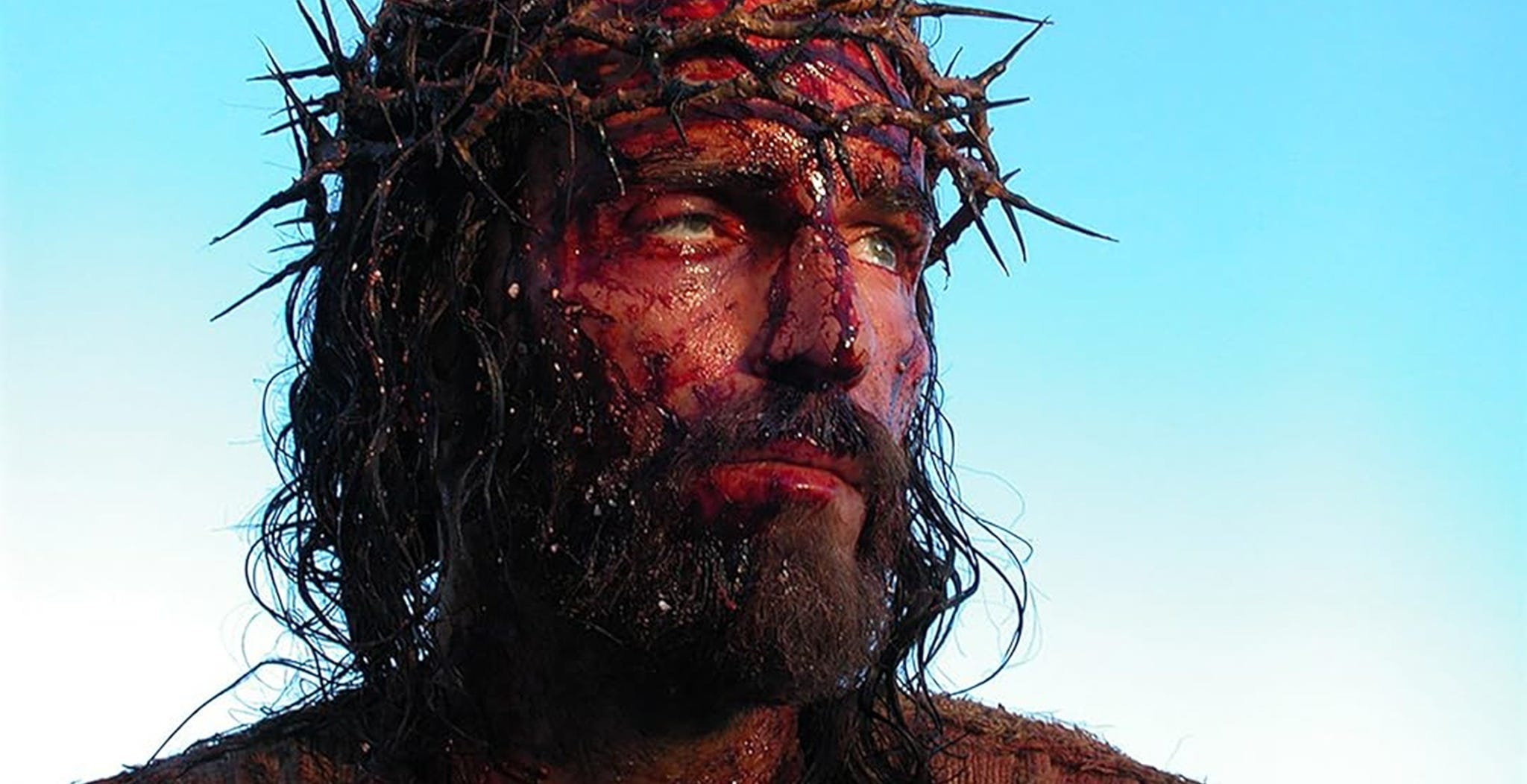
In such times, it is especially meaningful to meditate on the fact that Christ did not merely die for us, but he did so humiliatingly. For obvious reasons, Passion films cover his nakedness with a loincloth, but in reality, he was completely exposed to the mocking world. Some of the oldest Passion art we have reflects this before the tradition changed. “The Sovereign has been made unrecognisable by his naked body, and is not even allowed a garment to keep him from view,” writes the 2nd-century Bishop Melito of Sardonis. “That is why the luminaries turned away, and the day was darkened, so that he might hide the one stripped bare upon the tree.” As the death process progressed, it’s plausible that Jesus would have lost control of his bladder and bowels and that his slow suffocation would have caused involuntary erection.
Many books have been written on the theological necessity of Jesus’ dying this particular death. Prophecies foretell it, of course, but then that seems only to push the question back. To me it seems intuitive that in whatever age he chose to be born, his death had to be at once violent, lingering, and humiliating. Had he died of natural causes, this might have been humiliating, but he had to die by way of betrayal and murder. Had he been murdered by some method like beheading or stoning, the ordeal would be violent, but over too soon, and too dignified. Indignity had to be of the essence of his death. While there are a thousand ways for the human body to experience indignity that he didn’t experience, it still had to be said of him, as it will one way or another one day be said of us all, that his body had felt the meaning of the word.
Lately I’ve been both saddened and heartened to watch interviews with former Senator Ben Sasse as he chooses to die of pancreatic cancer in public. He’s always smiling, but he’s always in at least some pain. His face looks raw as he undergoes an aggressive treatment to eke out a few more months before the inevitable. He’s matter-of-factly described how the treatment attacks his skin, and how his face was “falling off” before some skilled oncologists helped him to piece it back together. To make it worse, he’s a stomach sleeper, and he describes how his face would clot against the pillow. Meanwhile, of course there are all the tumors all over his vitals, so many it would be pointless to pluck out a couple here and there with surgery. He’s joked about the indignity of having to answer repeated questions from doctors about how his bowels are doing. He and his family sustain themselves with gallows humor, as one does, as one must.
They also take long walks through cemeteries, a habit he’d practiced in the before times anyway. He recalls a particularly glorious one in New Haven, Connecticut, with big stone columns erected in the height of mid-19th-century industrial pride. Over the entrance is a massive crossbar. In all capital letters, it reads AND THE DEAD SHALL BE RAISED.
W. H. Auden, in his commonplace book, jotted down reflections on the exercise of asking ourselves who we would have been on the first Good Friday, and what we would have been doing. It’s hard to imagine oneself as a disciple, or as one of the bigwigs condemning Jesus to death. This is how Auden imagined himself:
In my most optimistic mood I see myself as a Hellenized Jew from Alexandria visiting an intellectual friend. We are walking along, engaged in philosophical argument. Our path takes us past the base of Golgotha. Looking up, we see an all too familiar sight — three crosses surrounded by a jeering crowd. Frowning with prim distaste, I say, ‘It’s disgusting the way the mob enjoy such things. Why can’t the authorities execute people humanely and in private by giving them hemlock to drink, as they did with Socrates?’ Then, averting my eyes from the disagreeable spectacle, I resume our fascinating discussion about the True, the Good and the Beautiful.
I really appreciate these reflections on a somewhat underdiscussed aspect of the Crucifixion and really all the way from birth to death. I mean the one who created the world had to have whatever was used as a diaper changed all the time, wasn’t physically strong enough to do X, Y, or Z things around the carpentry shop until he became an adult, and just even the most basic of indignities relative to being a human being and that’s before being brutally tortured and publicly executed. The Cross is such a profound mystery that He would love us rebels enough to go through all of that to then claim rebels as brothers and sisters.
The contrast between the horrors and false dignity of the “death with dignity” crowd versus a good currently still living example of dying well is also well worth the read here.
On the humiliation of Jesus’ death, I was struck today how the Roman soldiers abused Him before the crucifixion: the crown of thorns, the kingly robe, the mock worship. He could have ended it all with a thought, and yet…