

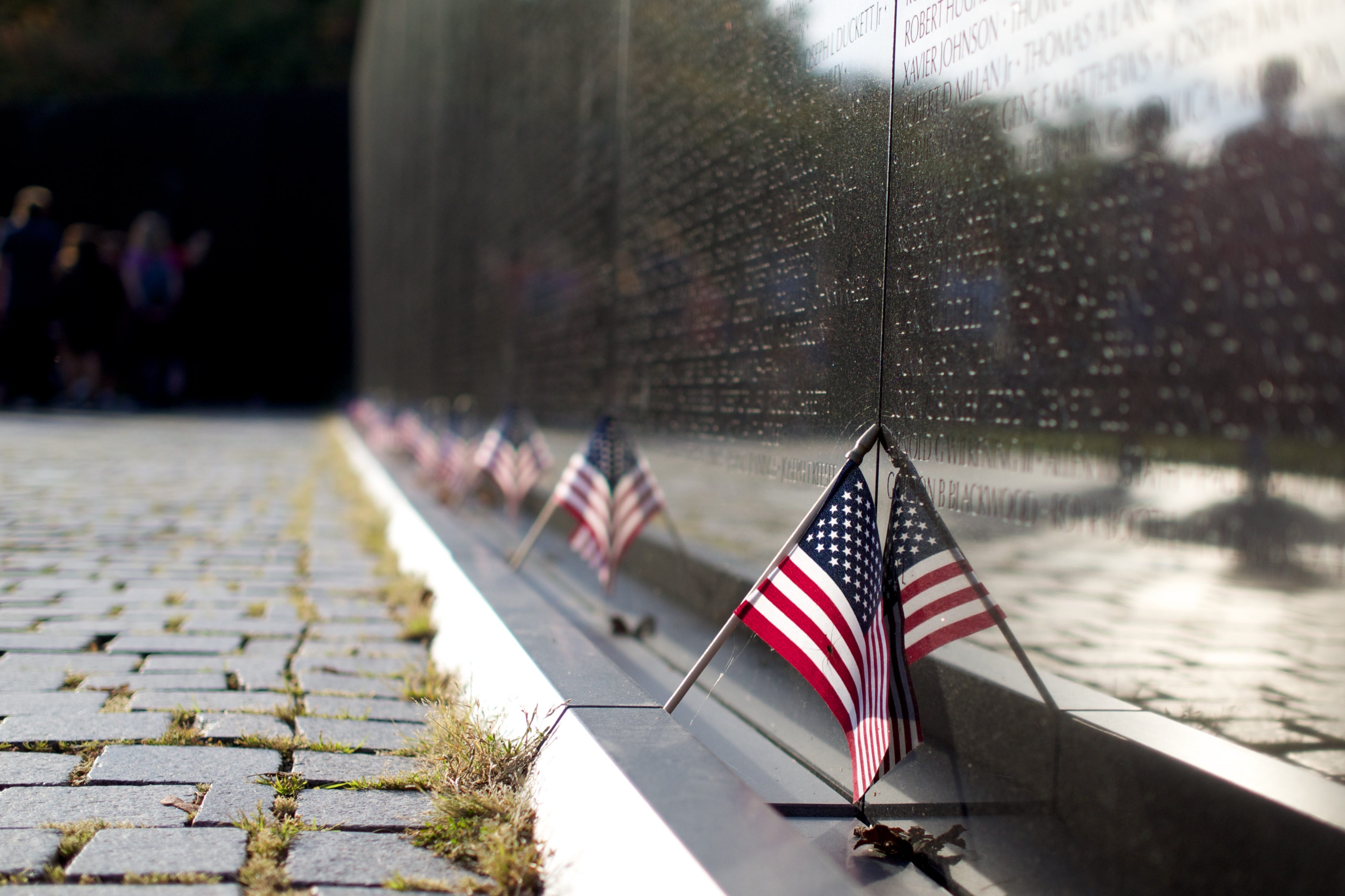
Happy Memorial Day. I never do this, but since I’ve gained so many readers since this essay was first published back in 2023, and since it’s always been one of my personal favorites, I’m dusting it off today. It’s free to share, so share away.
My childhood was unusually defined by radio. We didn’t have cable, so the time other kids spent watching television was time I spent listening to kids’ radio programs. My favorite was a particularly long-running, popular show called Adventures in Odyssey, a small-town sitcom in evangelical Christian perspective. It wasn’t high art, but it was clever and earnest and well-presented. Among other wholesome things it gave me, various episodes instilled a healthy respect for American veterans. The writers weren’t interested in complexifying simple values like patriotism, duty, and courage, for which in hindsight I’m grateful. I was a child, and I didn’t need this stuff to be complicated. More nuance would come later, but it was important that my foundation was laid without cynicism.
The show first aired in 1987, when Vietnam was still a fresh wound and World War II was still within living memory for the fictional town’s wise older characters. Several throwback episodes revisited those memories, Old Hollywood style. But the couple episodes handling Vietnam had a different flavor. They didn’t give the listener a “worm’s-eye view” of the Vietnam conflict. The writers knew there would be no good way to do this without making the show too grim for a child. Instead, they explored the memories of the families left behind—the man whose big brother chose not to dodge the draft, the widow whose husband didn’t live to meet his son.
Even these episodes, sad as they were, remained consistently patriotic. The noble big brother, modeled on the writer’s own brother, is contrasted in memory with a scruffy, draft-dodging hippie friend. The widow delivers a stirring Memorial Day speech pushing back on the anti-war sentiment her son has encountered in school. The take-home message is that however messy the conflict, honor and courage still mean something, should still be memorialized.
I still believe in that message. And yet, in revisiting the episode about the war widow this weekend, I couldn’t help feeling sympathy for the character of the teacher who gives his student an anti-Vietnam book. Unaware that the student’s mother is a war widow, he launches into a bit of heavy-handed dialogue about how all the soldiers “went over there and died for nothing,” or worse, became murderers. The town’s father figure, a World War II veteran, later pays a visit to chide the teacher for the damage he’s unknowingly caused. Predictably, it emerges that the teacher lost a brother in the war. One really feels sorry for everyone in the story—both the teacher whose grief is inevitably mixed with anger and the boy now haunted by dreams where his father is accused of being a murderer.
There’s a philosophy of war within which even though the boy’s father was not a murderer, he was still, in some sense, indirectly complicit in murder. By participating in the system, in the “machine,” he still struck a terrible bargain. He became a cog in a wheel. He lost himself. Then he died, for nothing.
The episode rejects this philosophy to place the focus back on the individual soldier, the individual honorable man who lives and dies with his own hands clean. By Memorial Day, the son has lost his appetite for battle reenactments. So, for the first time, his mother stands up and reads her husband’s last letter, where he anticipates what will be written about the war in future years. He can only write from what he has seen and done, and all he’s ever seen and done has been about fighting evil and protecting the innocent. These are the memories he shares. This is the legacy he leaves.
But I still understand that teacher. I understand him, because I hear in his voice the same dull ache that I hear in the voices of my own generation. Like the war writer Phil Klay in this essay passage about visiting the graves of 90s kids at Arlington, he can’t simply grieve. He can’t simply memorialize:
Their mission, we were told, “will not involve American combat troops fighting on foreign soil.” They would conduct “supervise, train and assist” missions. They wouldn’t constitute “boots on the ground.”
So when they die, our government does what former defense secretary Robert Gates calls “semantic backflips” to avoid saying that our troops are in combat. At a recent press conference where journalists repeatedly asked the Pentagon press secretary whether or not we were “in combat,” he had the unenviable job of explaining that, well, they’re “in harm’s way” or “in combat situations,” or “they have found themselves under fire.”
Such evasions grate on me, especially around Memorial Day. This year’s war dead—nine so far—didn’t slip, trip, and find themselves in combat. We sent them there to fight a war on our behalf, whether we like to acknowledge that or not. They went, they fought, and they died.
So my sadness this weekend, the same sadness I felt walking through Arlington, is mixed with something else. I can’t simply reflect on the dead of my war. I can’t simply memorialize.
Last year, I had a high school student who was very earnestly considering a career in the Marines. He talked quietly about the videogames he’d grown up on, the things he looked up to in veterans, the longing to experience the brotherhood of war. A gentle, thoughtful kid. Privately, I hoped he would take a different path. When he decided to go to trade school instead, I breathed a sigh of relief.
There’s a cliché that only two men ever died for you: Jesus Christ and the American soldier. Growing up, I heard and earnestly loved a number of very well-meaning songs built on that premise. Later, I came to feel an unease around them—not because my respect for the dead American soldier had grown any dimmer, but because my understanding of his death had grown sadder. Because he wasn’t Jesus, and because his wasn’t the blood that could take away the sins of the world, or the nation.
Did the soldiers of Vietnam die for nothing? Did the soldiers of my war, and every other sad, murky, messy war we’ve ever tried to fight, die for nothing? How do you answer these things, quantify them? And as you try to answer, how do you look the widow in the eye, and the widow’s son?
To do this, you would have to define “nothing.” And “something.” And in trying to do this, you would find that there is no one way to do this. A man enters a war of dubious origins, with dubious outcomes. He does what he can. He loves his family. He loves his brothers in arms. One day, he gives his life for them. Is that “nothing”? He didn’t have to fight this war. It was not a necessary war. It was not a necessary death. It was a death that, through another career choice, could have been avoided as honorably as it was embraced. But was it “nothing”?
Perhaps not, in his case, because his death had meaning through sacrifice. But what of the soldier who’s robbed of such meaning in death, who never does anything heroic, unless one counts the simple act of risking a meaningless death? What of him?
We remember him. Today, we remember him. That is all we can do.
Viet Nam was very real in our lives. We threw a wedding together in 1964 because the government stopped drafting married men. New Years Eve, 1965, the draft notice arrived and January 25 I put my new husband on a bus in San Bernardino, CA, headed to Ft Bliss in Texas. Two weeks later my 43 year-old father died one evening of a heart attack and my husband came home for the funeral, went to the doctor for treatment of pneumonia he had already contracted at Fort Carson, CO, Army base. It was winter and we were from sea level southern CA. Fort Carson was next to Colorado Springs and winter is brutal. Viet Nam was real. Nothing was abstract or consensual. He did was he was told to do, pneumonia or not. A month later he was in the hospital, unable to walk, the beginning of months of traction, talk of faking it, news of a guy he was drafted with being killed by lightning. Nothing abstract about any of this. Eventually he was moved to Fitzsimmons Hospital in Denver, and Col. Brittis, a renowned surgeon, did a L4-5 laminectomy. My husband was 23. I had moved to the Springs as I had assumed he'd go to Viet Nam and probably die, so I wanted to be with him while I could. I visited him at Fitzsimmons and will never forget the huge orthopedic ward filled with wounded soldiers returning from Viet Nam. The soldier in the bed next to my husband had lost an eye and his face was badly scarred. Sixty years ago and the memory is clear.
A month ago I posted something in a neighborhood thread to those complaining about high gas prices, and though I didn't actually tell them to shut up, they got the message. Viet Nam cost us two years of unmeasurable events while we were utterly powerless to control anything. Suck it up and pay for the gas for a few more months and be grateful for a few thousand things. Memorial Day is today and I actually googled AI asking what the Viet Nam war accomplished other than nearly 59,000 fatalities and unfathomable damages physically and emotionally to millions of soldiers. AI basically said, 'not much." And yet, since we've lived long enough to be very old, we recognize the redemption of suffering, that God was indeed in the mix with us during that time. Husband got a cushy job in the Administration building due to a Sgt Major he met in the hospital, he never pulled KP and actually made E5 in two years. It was our initiation into the Scripture that declares that, " I have learned, in whatsoever state I am, therewith to be content." At least the seed for that maturation was planted then. I shed tears again today watching the ceremonies at Arlington, feel the pain of loss so many have suffered, losses much greater than ours. I think I will close with the truth that in 1966, the only option we had to avoid Viet Nam was going to Canada so compliance was the only choice. Wishing things would have been worth it doesn't matter, but I do wish it mattered. He's had a lifetime of back problems and two more surgeries as well, so there's that.
I've felt your same struggle my whole life. I can intellectualize the necessity of war. What I can't grasp is the reality of it. How it works. What would make someone sacrifice himself to an abstract as distant as a government that may only to a degree represent anything he actually believes -- much less sacrifice himself to the immediate cause of the conflict at hand?
I was lucky. I didn't have to decide. Aside from the simpler, but more damning question of personal courage, the way I was leaning back then, I would have divided my family.
But, I was one year too young for the draft. The very year I turned draft age, they stopped conscripting us. I didn't have to dodge.
Not so my brothers. All three were drafted. All three served. And the Vietnam vet of the three still suffers with the PTSD that the front lines of so long ago left him.
Oddly, I didn't personally know a single soldier to memorialize. Nobody I personally knew died. That's pretty remarkable given how many I know who served.
My one brother and I are both on the conservative side of the political spectrum. He, maybe moreso than me. Me, I'm more conflicted. I'm very bothered by those with whom I am forced to coalesce in order to hope my political views hold any sway in this republican democracy. Still, I realize that in the political world of the binary choice with which we are left, I have little problem comprehending what I am voting against. So I vote with a great number of fellow citizens with whom the only thing we agree on is that the opposite vote represents worse. I'm not alone. I think most of the people I know vote with the same resignation (And I hardly know anyone who has voted FOR a politician in the past 40 years. All votes have been an "against" vote. And we all stand in abject befuddlement that in a country of 300 million people we are left with the choices we are left with.)
Anyway, that brother and I were discussing our dawning realization that, though most would describe the political divide as one of collectivists vs individualists, that is not only a false dichotomy, it is an unnecessary confusion. Both sides are collectivists. And that reality is never more evident than when the "individualists" willingly sacrifice themselves at wartime for the collective.
The "individualists" are collectivists. We LOVE our constitution and marvel at the nearly miraculous wisdom therein. A wisdom that (in our view) finally grasped a heretofore unrealized possibility -- that just maybe a government should not be all powerful. And maybe all decisions for a diverse population, topography, and geography shouldn't be centrally planned.
And we are collectivists in our view of the unspoken social contract that understands that if we are going to determine our own governance, the government thus created is going to reflect who we are. We cannot expect the government of a democracy to be comprised of better people than the population from which it is derived. Each and every one of us owes it to the collective to be upright and moral.
But this is one individual who feels shamed by the unquestioning sacrifice of my fellow citizens. They did for me what I'm not sure I would have done for them. I can only hope to not squander the grace they afforded me.