

Someone recently went viral on Twitter with a post lamenting the way obscure discarded books are being systematically bulk-bought, scanned and cannibalized for AI training, then destroyed. The scanning process cuts off their spines, and when it’s finished the originals are shredded. Buyers are kept anonymous. Books produced before 2022 are at a premium because they are guaranteed to be AI-free. All of this has been ruled legal because as long as just one copy of the work exists at a time, then it’s “fair use.” Isn’t that neat?
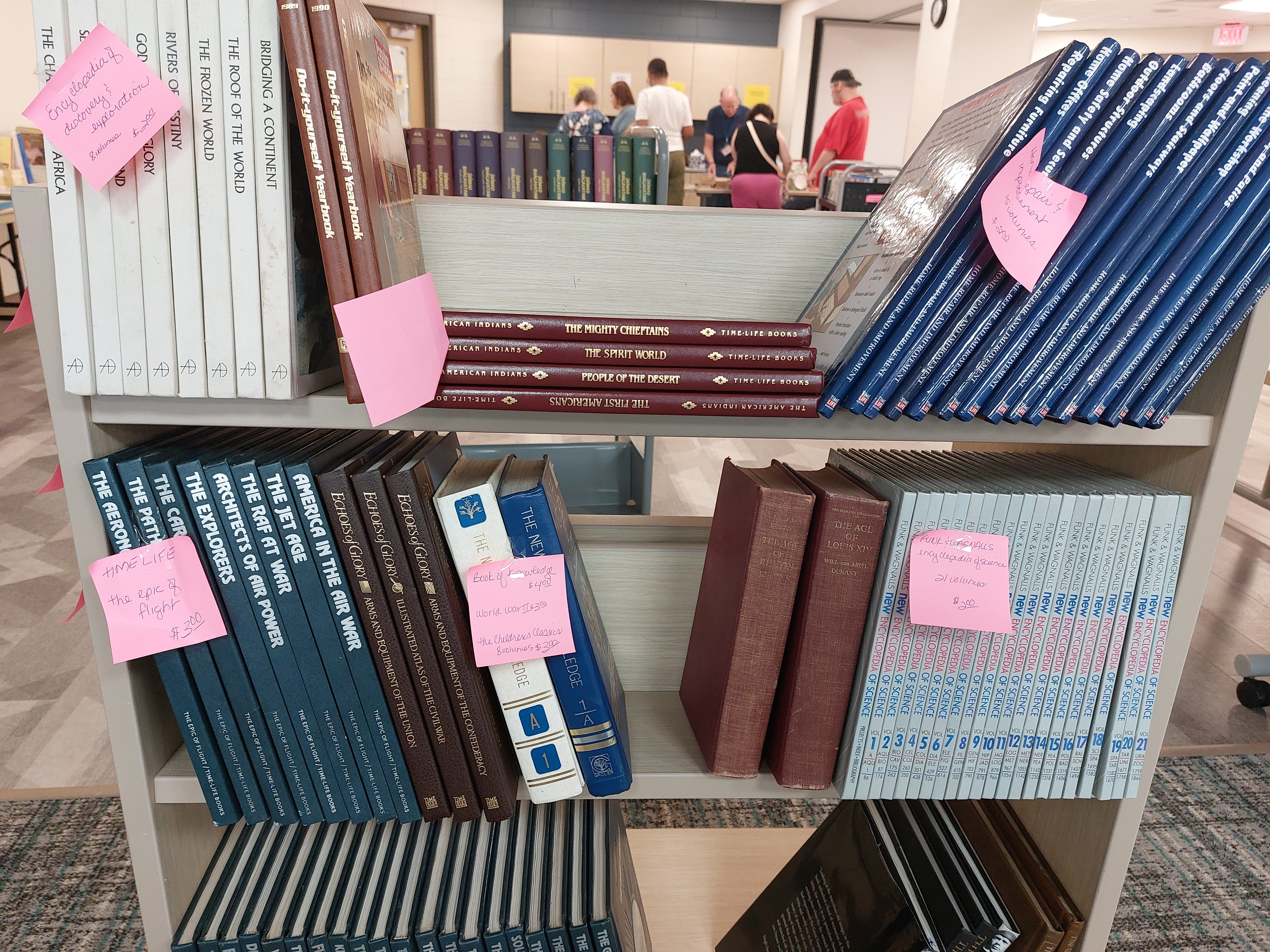
A horrified friend reshared this story and urged people to rage against the dying of the light by frequenting their local used bookstores. Sadly, as friend of the Stack Quentin Crisp has been telling me about his own region of the UK, not everyone has that option. I have fond childhood memories of a used bookstore in my own town, which to my knowledge remains open (though the husband of the couple who owned it has sadly died, as well as their beloved shop cat). However, I’ve spent more time frequenting my local library, which does the community a service by collecting and reselling cast-off books, music, and movies in a giant sale every other month. The prices are rock-bottom. Various shelves have a “three for $1” deal going. Whole encyclopedia sets will go for $3.
This is a temptation for me, even though I consider myself a pretty modest bibliophile, especially when it comes to physical books. My father was a different story at my age, as I chronicled in this new piece for The Lamp about my childhood as a bookish homeschooler. I’ve been limited in following his example partly because I’ve spent most of my life literally unable to store all the books I already own in one place, let alone expand the library. Plus, with current books, I prefer Kindle for research and note-taking. However, as a proud new homeowner, I’m starting to get used to the idea of bookshelves, especially the built-in ones in my living room. It was the strangest, most wonderful new feeling earlier this summer to slowly unpack some of them and begin roughly assigning shelves by genre. I remain cautious, but you could say I’m more open to expanding my collection now than I used to be, especially now that archive.org has lost a lawsuit which forced the site to remove much of its copyrighted content for people who don’t have a “print disability.” (An unworthy part of me is tempted to fib my way back to what was taken from me, but so far I have resisted.)
I confess, though, that I didn’t actually go home with any of those encyclopedia sets at the book sale. I also walked past collections like these, which now appear poignant in their obsolescence:
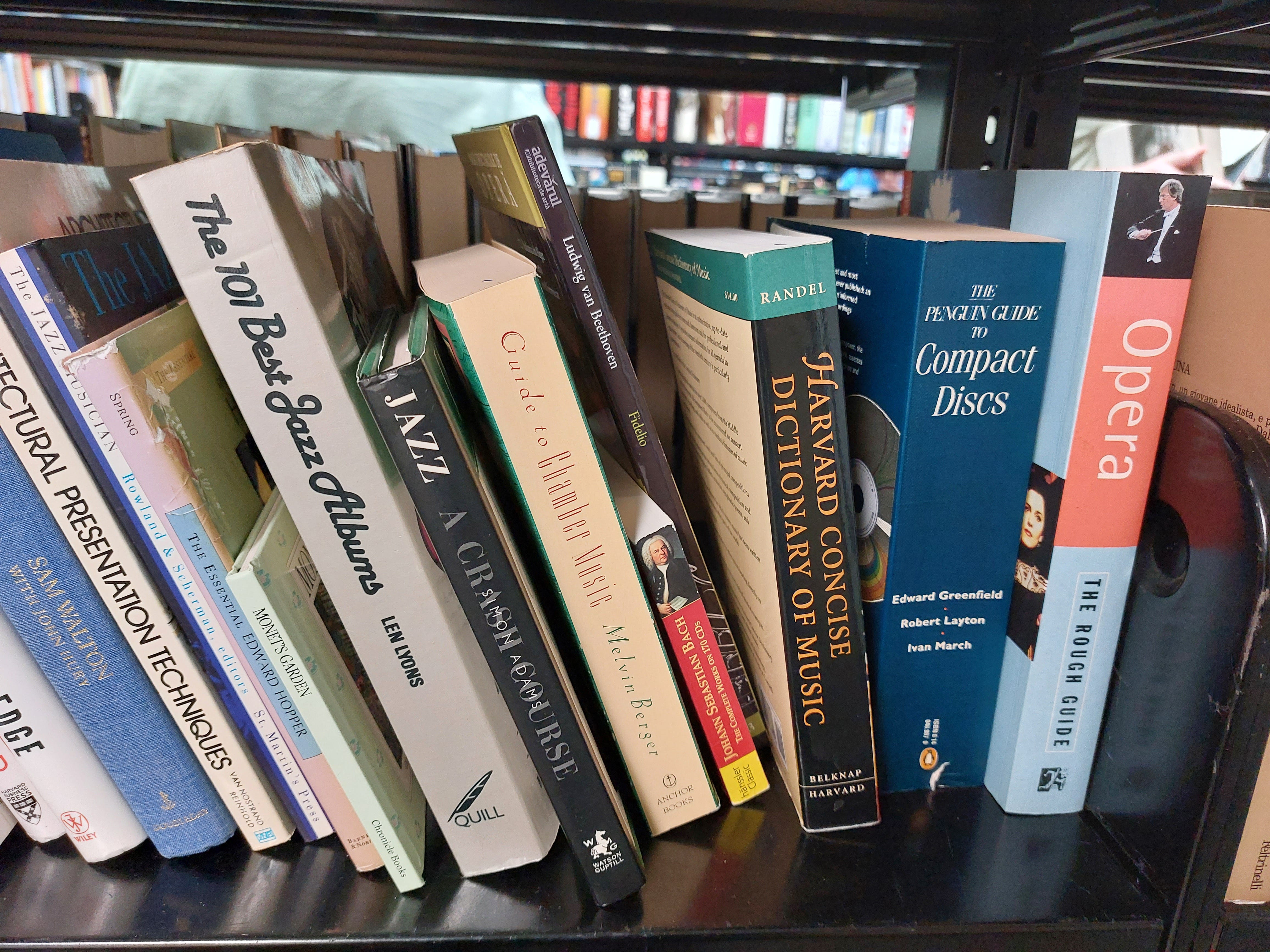
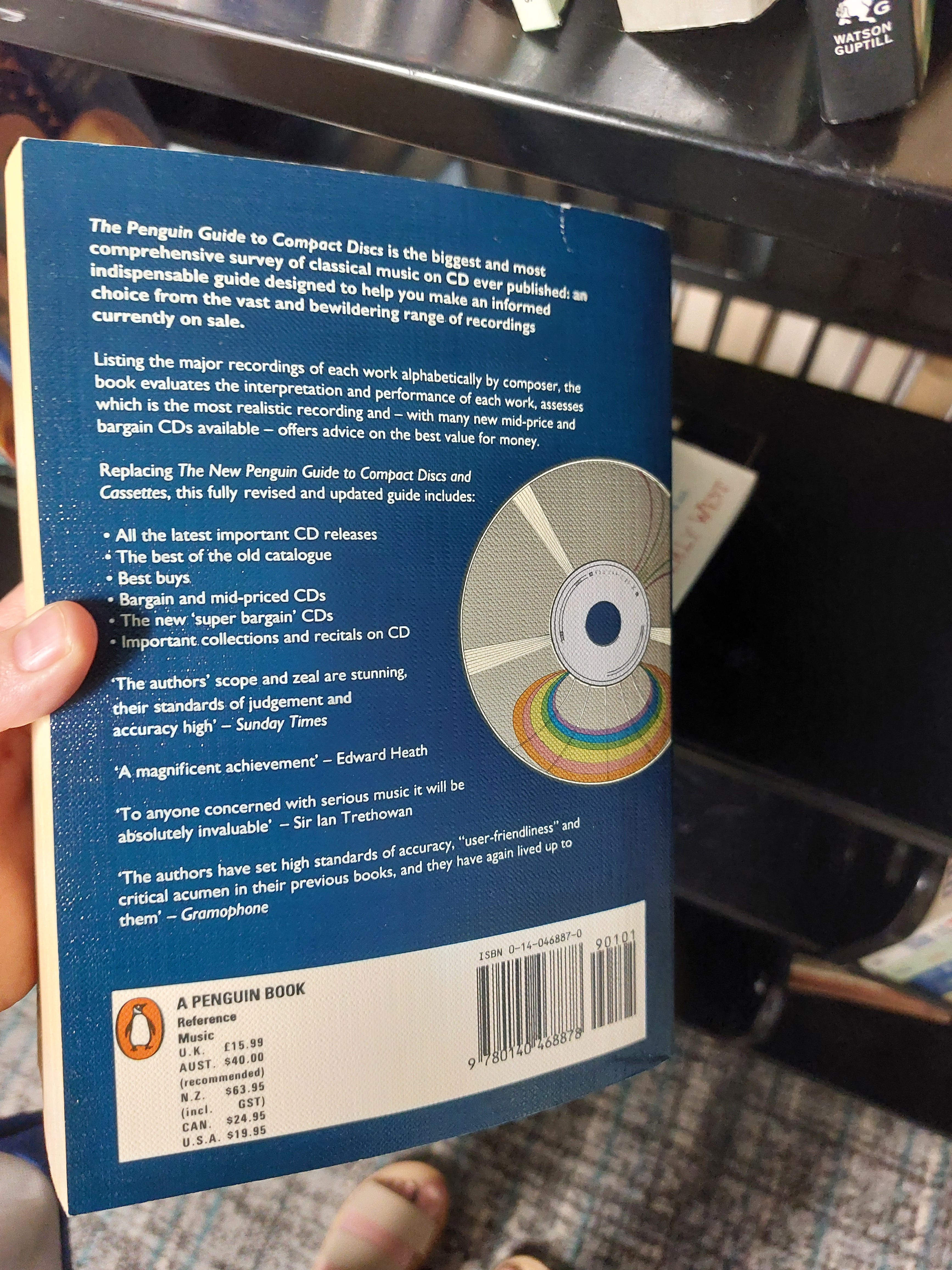
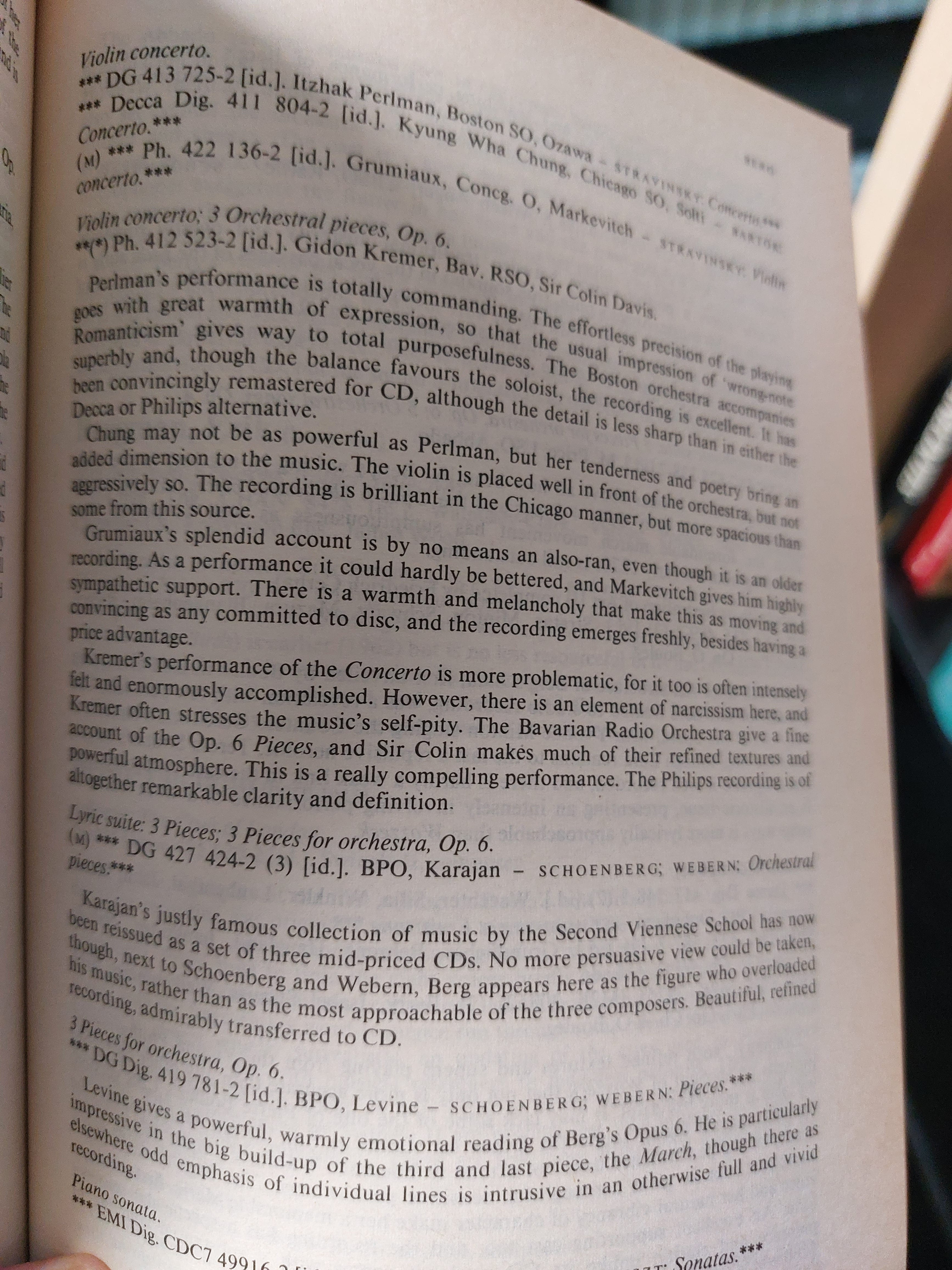
I want to look on the bright side: It’s a good thing that the information in books like these is now so widely available. But I still feel a twinge when I think about all the careful human labor that went into curating them. Here’s a look at the back cover and a random page in the Penguin Guide to classical music on CD. Note the quality of the writing even in a tiny little encyclopedia entry like this description of a Perlman performance.
I’ve filled a tote bag with two summer hauls’ worth of findings this year. As I’ve leafed through my acquisitions, I’m moved to reflect on the sheer number of worlds that are lost to us when books gradually fall out of time and memory. Many book-lovers can recall “rescue missions” when they saved as many as they could from a doomed batch before the rest were carted off. Sometimes I wonder how long my library will keep books in sale circulation before giving up on them, or if there’s a certain fixed point at which they’re rotated out.
This post will be a snapshot of a few of the disappearing worlds I’ve been discovering. I will start in an unlikely place, with a cookbook.