

This post is free, but much of my work in this space is reserved for paid readers, and the end-of-year annual subscription sale continues for anyone interested in upgrading at $30/year. Thanks for your support!
Merry Christmas to all my readers new and old. Wherever and however the season finds you, I hope you have found comfort and joy.
This Christmas, and this year generally, I have been moved to reflect on the great marvel and the great fragility of man as an embodied creature. Every year brings its bloody headlines, but this year’s felt more shockingly bloody than usual. And, this being 2025, a few of the worst moments were endlessly circulated online for everyone to watch. If you’re very online, you try to practice avoidance, but it’s imperfect. You miss the one where a young woman is stabbed in the neck, only to see the one where a young man is shot in the neck.
Then there were the headlines of natural violence, fire and flood cutting their paths like death’s scythe through the little homes and kingdoms we raise up. There were stories of young girls swept away from their bunks at summer camp, never to be seen again.
And just now, when we thought the year couldn’t hold any more sadness, I read the news that former Senator Ben Sasse has received a terminal cancer diagnosis. He informed the public in a statement that modeled clarity, grace, and Christian hope—hope, which he took care to distinguish from mere optimism. Optimism is nice to have, but in such moments, it’s a flimsy thing. It will not do when you have to tell your daughters they will walk down the aisle without you and your parents that they will bury a son. He writes, “Those who know ourselves to need a Physician should dang well look forward to enduring beauty and eventual fulfillment. That is, we hope in a real Deliverer — a rescuing God, born at a real time, in a real place. But the eternal city — with foundations and without cancer — is not yet.”
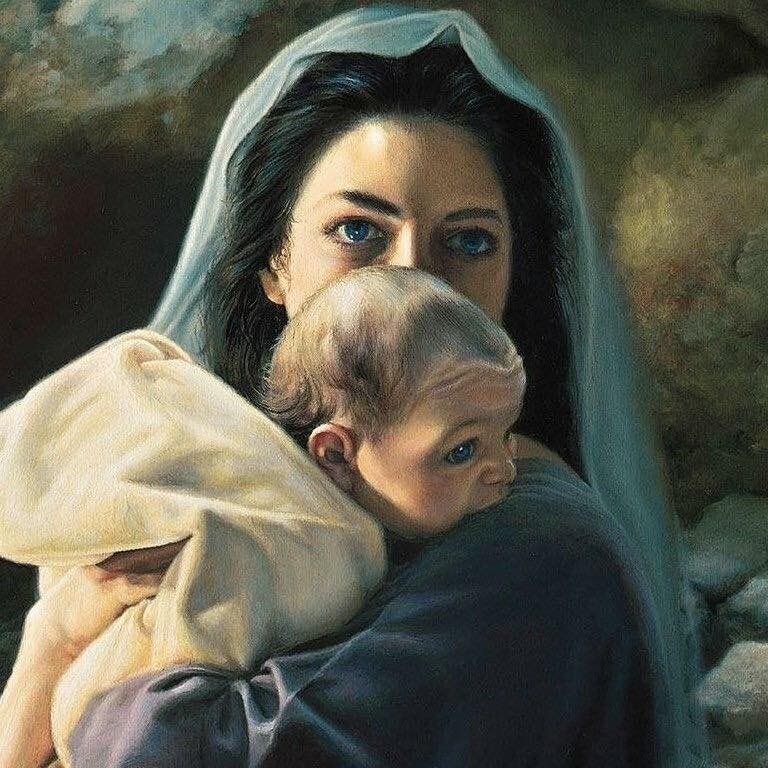
There are those who break cleanly from the whole business of the Christian story by declaring it nonsense beginning to end. These are the Richard Dawkins types we know and love. But there are others who are drawn to it, even willing to entertain that parts of it could be literally true, while hesitant to embrace the whole. Charles Murray, in his honest new memoir Taking Religion Seriously, writes that he is forced to concede the power of the testimony around Jesus, his life and teachings, even the resurrection. He is convinced that God is real and that Jesus had some sort of connection to the Almighty that we do not. At the same time, he keeps a foot in skepticism, questioning whether Jesus was really born of a virgin. Maybe, in some mysterious sense we don’t really grasp, Jesus was a kind of superman who ascended to something like divine status and even burst the bonds of death. But God come down from heaven to earth, growing in a human womb, born as a human baby? This is the strangest thing of all. Yet it is where the whole story begins, for this is where it must begin. As Auden writes, “We who must die demand a miracle.”
This year marked five years since my friend Mike Adams committed suicide, in the summer of 2020. I’ve written about him here. Mike was a brave and decent Christian man, a man who up to the month before he died was still reaching towards the hope of salvation. This week, his brother posted an unpublished reflection he wrote about the last Christmas they shared with their mother, two years before. Mike suffered all kinds of trials that year—physical injury and chronic pain, property damage from Hurricane Florence, and then in the fall, the abrupt collapse of his mother’s health. She had spent years enduring Parkinson’s disease, but things took a sharp turn for the worse after she was given insufficient oxygen during a routine eye surgery. She emerged with symptoms like dementia. A downward spiral was set in motion, and there would be no coming back.
Mike’s mother was a strong Christian woman. He remembers how she lifted her weak arms to him as he prepared to leave her after their last Thanksgiving, steadfastly declaring, “God is in control. And one more thing, Mike. God is good. And you remember that. All the time.”
He didn’t think they would spend another holiday together, but providence smiled and granted them one more Christmas. Amid all the sad, mundane business that attends the ending of a life, Mike and his brother had a communication breakdown about who was to drive her from the nursing home to the Christmas Eve service. All was well in the end, and they wheeled her in merely somewhat late—still in time to hear the sermon and receive communion. Afterwards, there was a distribution of candles. Mike lit one and carefully gave it to her, clasping her hand in his to keep it steady. He thought he heard her speaking to him as they sang the closing carol. When he bent down to listen, he heard that she was simply whisper-singing along: “Joy to the world, the Lord has come.”
That year was a year of suffering in Mike’s memory. But as he allowed himself to focus on that moment, that small beacon of light, he could believe that the suffering meant something, that it was not all for nothing. Why he couldn’t keep clinging to this, why he couldn’t hold on, even those who knew him best couldn’t tell you. All they could do was weep.
Yet we sing joy, joy to the world, for the Lord has come. The Lord has laid his glory by. The Lord is born, that man no more may die.
We who must die demand a miracle.
How could the Eternal do a temporal act,
The Infinite become a finite fact?
Nothing can save us that is possible:
We who must die demand a miracle.
Let every heart prepare Him room. And heaven and nature sing🗣️
Thank you for writing this, Bethel. As you said, it's been a tragic year in the broad world, but also full of personal tragedies for many as well. I hope you and your family have a Merry Christmas.