


This year, I was offered a discounted ticket to return to the Alliance for Responsible Citizenship conference in London, which I experienced for the first time last year. That was my first experience of London, so I enjoyed myself very much, though in the end I found it more valuable as a networking opportunity than as a conference. This time, I returned in a way that gave myself more bang for my buck, spending a good week and a half in the city. The weekend before ARC, I participated in a small event called Breakwater, which was essentially an experiment in bringing Christians and atheists together for candid dialogue about religion, culture, and evangelism. That was also a good experience in its very different way, including some fascinating conversation outside the conference itself, and I want to write about it, but it needs a little more time to stew in my head.
What this means is that I’m going to write about all my London adventures eventually, just somewhat out of order. To make sure my paying readers get their money’s worth, I’ll reserve much of it for them. This first free installment will give you my impressions of the first day of the ARC conference, followed by my impressions of an evening at the literary salon Verdurin. I was invited by the salon’s proprietor, art critic Pierre d’Alancaisez, who co-edited the collection of contrarian gay essays I recently reviewed here. When he’s not editing books or running the shop, Pierre writes scalding short reviews of postmodern “art”. Pierre, you may be inferring, is a Character. He was at ARC too, briefly, but as you will see very much not of it. On this evening, he was hosting a book launch with the American author Jacob Siegel, for Siegel’s fascinating book The Information State. Pierre predicted that this would be a spicier use of my evening than ARC’s historically underwhelming drinks mixer, and he was correct. So, if you enjoy all this, and if your appetite is whetted for more, smash the blue button and help me begin to recoup my exorbitant expenses in London cab fees. My flash sale of $30/annum is being extended for ONE DAY MORE:
So what is ARC, exactly? Last year, I came away with the impression that it wasn’t completely sure how to answer that question for itself. At the time, I said that it seemed to be pitching itself as “the world’s largest networking point for people who want to reclaim a conservative, humanist-in-a-good-way vision for the West.” Or, “the opposite of whatever Klaus Schwab and the World Economic Forum are doing.” Yet with some of the same grandiose vibes and intonation as WEF. At an afterparty this year, someone reflected to me that he was dubious about this whole approach of keeping WEF vibes while swapping in anti-woke content. The speeches are very polished and self-serious, the whole event smells of money, and the audience skews older and well-heeled. Much is said about the plight of the working class, but it’s in the nature of this sort of conference that actual working-class people are pretty much nowhere in sight. (The only real exception on the stage was one-hit wonder musician Oliver Anthony, who gave a punchy, poignant speech about reclaiming our pioneer heritage.)
I’m not saying that any of this is inherently bad or sinister, and in fact I find myself agreeing with most of the sentiments in most of the speeches. It’s the sort of conference at which lots of time is spent earnestly talking about how to Save the West, Repair the Social Fabric, and Relay the Spiritual Foundations of Our Civilizational Something-Something. I have nothing against all that. I do but observe.
Logistically, this year’s installment was a big improvement over last year. Last year, it was held in the ExCel, a massive, aesthetically ugly building in which you had to walk for what felt like a mile to reach the actual event. Finding toilets or water also felt like a heroic quest. This year’s venue was the Olympia, vastly more elegant and accessible in every way. There were other cute touches too, like an “ARC village” with street signs pointing the way to different areas, including a bookshop. Also new this year were the “Corners,” where people could briefly meet and greet with the speakers from each session. I didn’t end up making use of these however, partly because they were harder to find, partly because I was too busy catching up with fellow attendees. And partly because I had already discovered it wasn’t as hard as I thought to slip into the Gold Room, aka the VIP Room, aka the Room Where You’re Technically Not Supposed to Be Unless You’ve Paid a Ridiculous Amount of Money. (More on these adventures later!)
As last year, the sessions were themed. Mornings were dedicated to reflections on Our Civilizational Moment and the Social Fabric, afternoons focused on policy discussions about economics, energy, and occasionally foreign policy, and then evenings focused on all things tech and AI. Leftwing media likes to paint the conference as “far-right,” but the actual far-right never thinks it’s right-wing enough. As an American, I find its politics a little hard to get a handle on, as I generally find it hard to get a handle on the British “right,” which doesn’t look like the American right. Kemi Badenoch showed up to make a sales pitch no one is buying for small “c” conservatism, which sounds rather bland and centrist to American ears. But I would say the overall thrust of the event felt broadly fusionist, although I notice with interest that very little (possibly nothing, unless I missed it?) was said about abortion. Social conservatism was represented though, probably most boldly in Katy Faust’s talk about the social imperative to raise children in a heterosexual two-parent home. The hysteria about “far-right” what-not is maybe largely due to ARC’s willingness to import this kind of “edgy” American commentary:
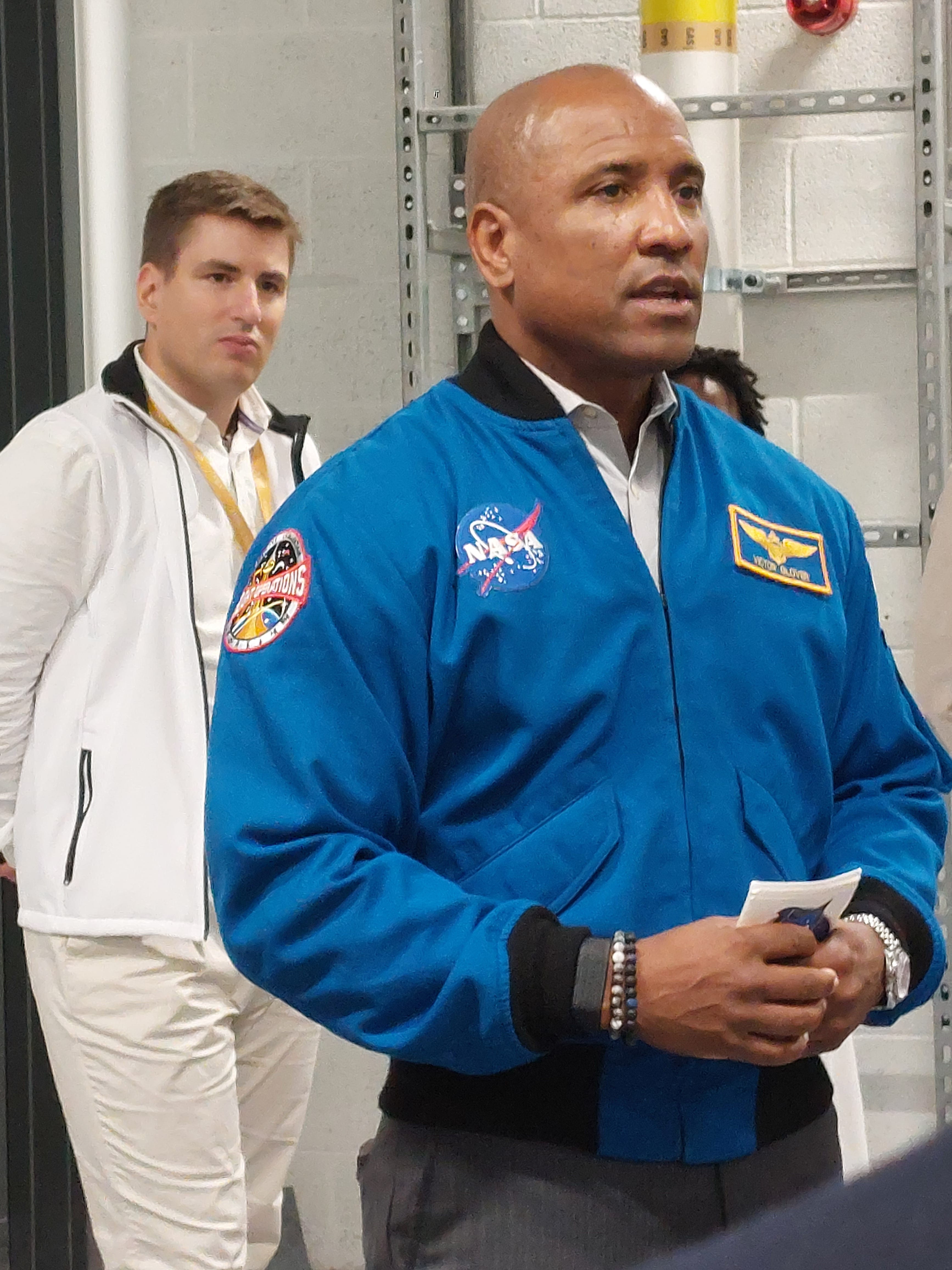
I showed up in time to sit in on Tuesday morning’s kickoff speeches, squeezing my way past some protestors holding signs about “fascists” and fossil fuels. A few of them seemed to be wearing frog suits for some reason. It seemed prudent to keep walking, but I now wish I’d taken a picture. My mind went back to them as I listened to Artemis astronaut Victor Glover, who among other uncontroversially inspiring things talked about the importance of stewarding our planet well. This spring, I opened a byline at the Wall Street Journal with a piece about how he sent Reddit atheists into a conniption by talking about God in space. Mr. Glover is an impressive man, and it was moving to hear him reflect on the mission, especially the moment when the moon came into view and someone said, “Oh my God,” which he believed to be precisely the correct response. There was a small crowd around him at the meet and greet corner afterwards. Sadly, no selfies were permitted, but I did snap a couple pictures.
Next up was Ignat Solzhenitsyn, son of Alexandr Solzhenitsyn. At the time, I was so sleep and caffeine-deprived that I didn’t realize Ignat was not reading his own speech but his father’s iconic address to Harvard University. It was a curious choice for a conference like this, as a sustained Eastern criticism of the West’s Renaissance and Enlightenment roots. Solzhenitsyn was very concerned to address the bad kind of “humanism,” the sort of aggressively secularized anthropocentrism that pushes God out of the civilizational picture. And yet, it was the East that succumbed to communism.
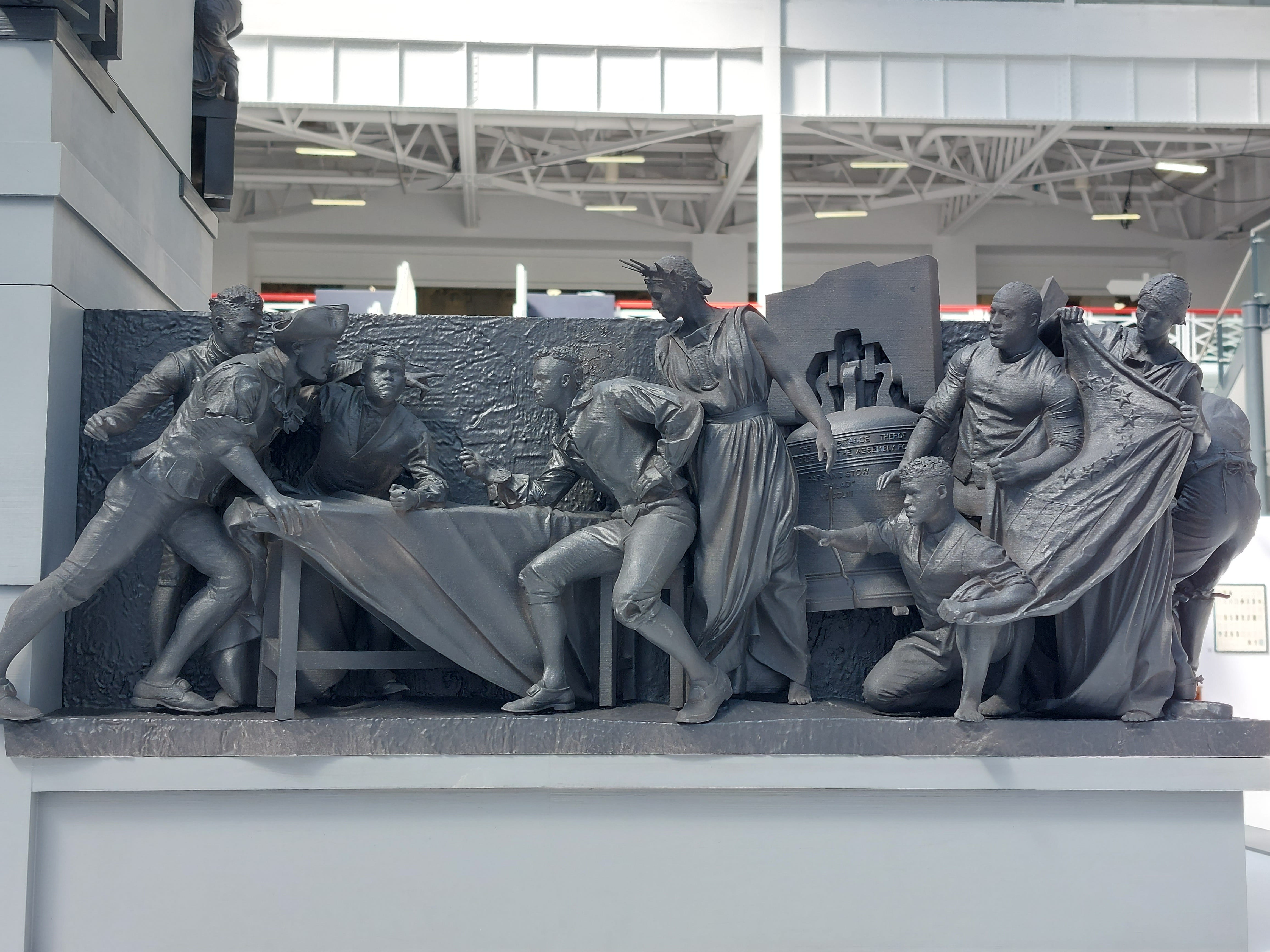
I’m not sure the conference organizers really thought this tension through, especially given that another one of their first speakers was neo-Renaissance sculptor Sabin Howard. Howard would describe himself as a humanist artist, but in the good sense, the sense in which I hand out business cards with the tag “Notes from a Christian humanist.” In fact, as Howard spoke passionately about his latest project, a 250th independence anniversary arch depicting “a people who rise to be their best version,” his language echoed Solzhenitsyn’s closing vision of anthropological ascent. (And you could say that in Victor Glover we have a quite literal manifestation of that “ascent.”) I personally prefer Howard’s World War I memorial as a piece of art, but it was charming to hear him rail against postmodernism (“I refuse to be represented by a cold pile of bricks on a cement gallery floor!”), and it occurs to me that at least some degree of anthropocentric pride is necessary to keep our civilizational immune system from breaking down.

It was quite interesting in this context to hear from Ayaan Hirsi Ali, and I appreciated the fact that Konstantin Kisin asked her to say a few words specifically addressing this question of good versus bad humanism. Her answer was that at least in the past, the remedy against narcissistic humanism was “built into the system” in the form of Christianity, which engendered a sense of individual responsibility. Where she came from, everyone was constantly hunting for a scapegoat—the Jews, the Westerners, some outside threat to the collective “us.” There was none of that sentiment expressed in Chesterton’s answer to the question, “What’s wrong with the world?” (“I am.”) Christianity is a check on this narcissism, a reminder that Christ is history’s singular Victim, and we commit a kind of blasphemy when we constantly read ourselves into his rightful place on the cross.
But this picture gets complicated when we consider the fact that increasing numbers of young men are now being drawn to versions of Christianity, including Eastern Orthodoxy, that engage in their own kinds of scapegoating. I want to be careful not to say that this characterizes all men in the Eastern Orthodox church (in fact I met an enthusiastic new EO reader at this very conference, so if you’re reading this, welcome, please don’t go!) But quite a few so-called “Orthobros” are engaged in their own campaign of “It’s fill-in-the-blank’s fault,” where the blank can be filled in by Jews, by women, etc. And, in fairness, there are Catholic and Reformed Protestant versions of this problem playing themselves out as well.
I think the conference would have benefited from a speaker or two who could have addressed this more precisely, specifically homing in on how Christian language can intersect with both left and right-wing identity politics. At a certain point, one hits diminishing returns with classical liberal pundits recycling anti-woke-left talking points. It’s not that I think they’re wrong, but they need to be supplemented by some deeper analysis. There were flashes of more depth here and there though. I was impressed by this speech from Nick Freitas, a pundit I wasn’t familiar with, but he spoke well about the boy crisis. He discussed how among other things, boys today are left craving a sense of tribe, which leaves them vulnerable to tribal anti-woke ideologies:
The “Social Fabric” section also featured Carl Trueman, who basically delivered a 12-minute summary of The Rise and Triumph of the Modern Self. I found this book interesting because I sort of agreed and disagreed with it at the same time. A lot of Trueman’s analysis is astute, but I suppose I am more inclined than he is to think that expressive individualism isn’t such a bad thing. Again, referring to Ayaan Hirsi Ali, it is that focus on the individual man that can when properly circumscribed provide a bulwark against the tyranny of the collective. But I do appreciate Trueman’s reflections on the “psychologized self,” particularly in connection with the unraveling of marriage and the sexual binary. Sex became political via the arrival of Freud and “orientation” essentialism, because the rules that governed sexual behavior became “rules about the kind of person that society will let you be.” And now, with the transgenderist reductio, we see “a rebellion against the last irresistible external authority that will tell you you are not who you think you are,” namely the body.
It’s good that ARC is actively inviting this sort of explicitly Christian analysis, which is in a sense simultaneously more optimistic and more pessimistic than some of the material I heard from non-Christian analysts. There was a panel including Freya India, a young writer who’s done good work about how Gen Z girls are encouraged to turn themselves into digital products. Full disclosure, I still need to read her book, but I get the general impression that she’s diagnosed the problem as something happening to girls. But girls also make free choices, as do boys.
ARC brands itself as a conference of Solutions to our civilizational problems, with speakers telling people the checklist of steps to Saving the West, Saving Our Kids, and so on. In its place, this is fine. But I’m reminded of the fact that Jordan Peterson initially rose to prominence because even while he was offering “rules for life,” he was also unafraid to acknowledge the fact that sometimes life just sucks, and then you die. Sometimes every possible thing that can go wrong will go wrong. Sometimes you won’t save the kids, or the school, or the country. Life, in other words, is a tragedy by default. The aversion of tragedy is the exception to the norm.
In an overlap of social fabric and tech themes, we watched a short film called “Another Way,” directed by Fabio D’Andrea. It tells two alternative narratives about an upper-middle-class family whose son is cyberbullied by his schoolmates. In the first narrative, the family’s blind spot around phones and social media makes them miss warning signs until it’s too late and their son is dead by suicide. In the second narrative, the parents are hands-on and proactively monitor their children’s device use. The son is still bullied, but his story ends “another way.” I couldn’t fault the message or the earnestness, but it felt very safe and tidy. It would have been less safe but more relevant to tell a story about digital pornography, and about the grueling tug of war between parents and children determined to crack every safeguard.
I’ll have more thoughts on ARC’s approach to the tech revolution later, but I thought this topic yielded some of the most interesting discussion, as well as some interesting internal tension between tech-optimist and tech-pessimist strains. On the tech-pessimist side, we heard a strong talk from actress/royal/education activist Sophie Winkleman, who has long campaigned against screens in schools and has now come out swinging against AI-mediated ed, especially for primary students. She did an excellent job with limited time articulating why the medium is detrimental, regardless of the message it’s conveying. Also she positively quoted Randi Weingarten for some reason, but apart from that, very good speech:
We also heard a talk from Chloe Lubinski, who works for Anthropic. I feel a little sorry for Anthropic. They’ve been treated quite shabbily by the Trump administration. If you don’t follow tech news, the very short version is that the Anthropic CEO expressed an objection to certain ways the admin wanted to use his tech (e.g., in military targeting), and as petty retaliation the Department of War declared them a “supply-chain risk.” It was typical of how this admin operates, and lefty or not Anthropic appeared to me clearly in the right (as it were). But because the company continues earnestly trying to make friends with as many people as possible, including the right-leaning people behind ARC, the left-wing media has also been in hysterics over the fact that they sent representatives to this “far-right” conference. So it seems they can’t win with anyone.
At the same time, I admit that I also cringe whenever their researchers try to talk about philosophy, metaphysics, AI maybe-consciousness, and so on. And there was a bit of that cringe in this talk by Lubinski. At the same time, there’s something to the point that she’s making, which is essentially that an LLM has the potential to make game-theoretic calculations in favor of “bad” choices depending on how it’s trained. This means human AI trainers carry a heavy moral responsibility. These machines learn by imitation. What templates are we giving them? A question worth asking:
During this talk, attendees were asked to vote in a poll asking whether we saw AI as chiefly a threat or chiefly an opportunity. I left early, but the tech-optimists were winning out, and someone told me later that their lead held. As a card-carrying tech-pessimist, I duly registered my minority dissent. While I’m not a Luddite, and I do recognize the positive potential for this tech, I think the cost is proving too heavy, especially in the education sector. This is something I might see if I can coax my father into doing some guest-writing about here, because as both a philosophy professor and an amateur software developer, he’s uniquely placed to weigh these pros and cons. British investor Paul Marshall observed in his mainstage speech that tech people don’t understand philosophy, and philosophers don’t understand tech, which rather neatly sums up the problem.
Before I get on to my evening at Verdurin, I want to highlight two worthy organizations whose booths I visited this afternoon. First, Hope for Justice is a group working to combat human trafficking around the globe. I enjoyed a chat over lunch with one of their representatives in the VIP room, which I wandered into in all innocence because an acquaintance reported that the food line was shorter there. (Once inside, I bumped into a speaker who told me the powers that be weren’t going to kick out lowly plebs as long as they behaved themselves. Though someone did eventually try, but that’s for Wednesday’s report!) Anyway, I visited the booth later, had a lovely chat, and picked up a plastic padlock with a QR code that leads to a page full of survivor stories, called the Freedom Wall—a clever and moving bit of branding. The other org I want to highlight is Freedom in the Arts, an advocacy group for artists, promoters, etc., who have been boycotted for not toeing the political party line. They’ve prepared a depressing report here, which among other things unearths a shocking amount of anti-Semitism.
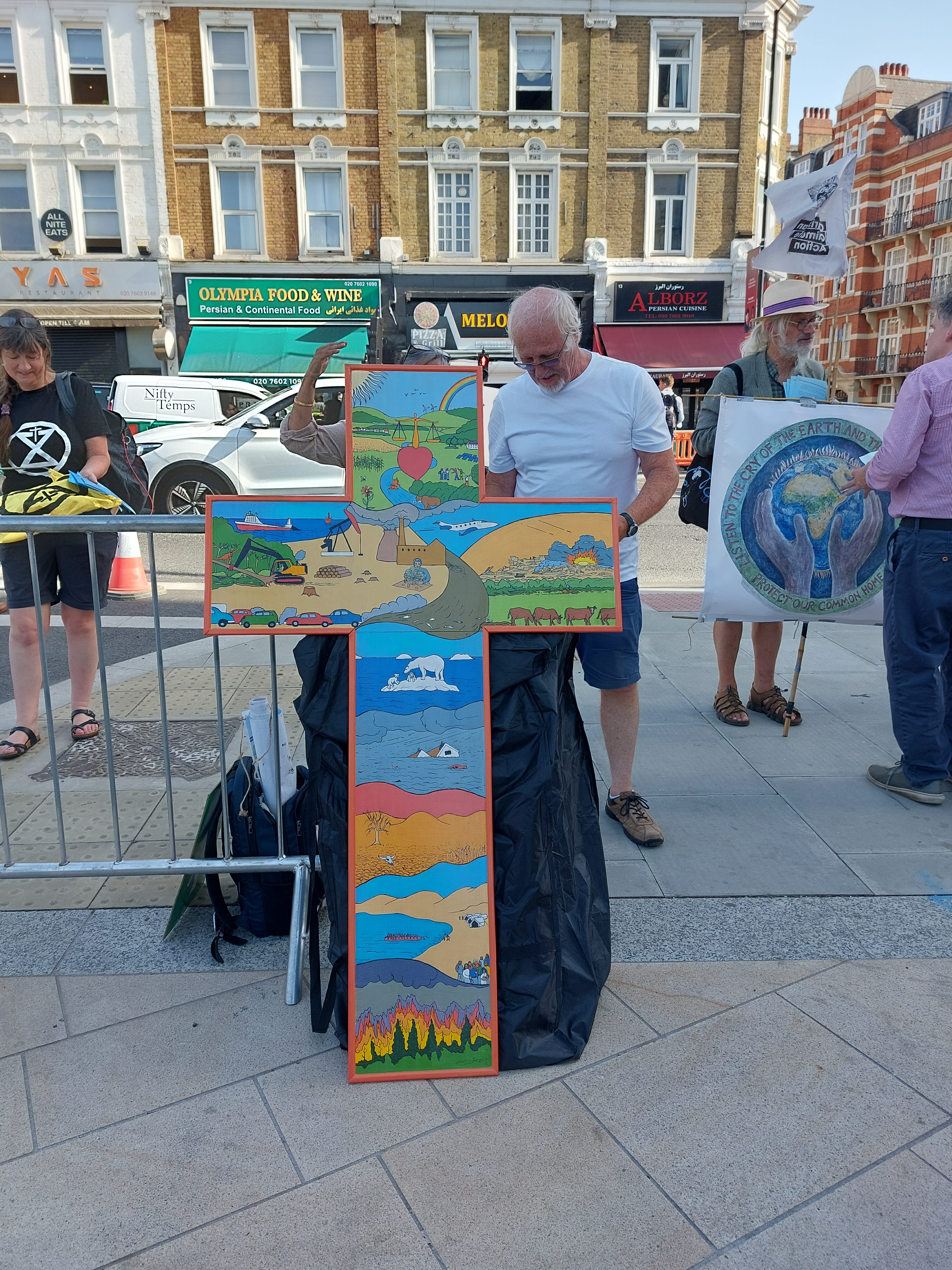
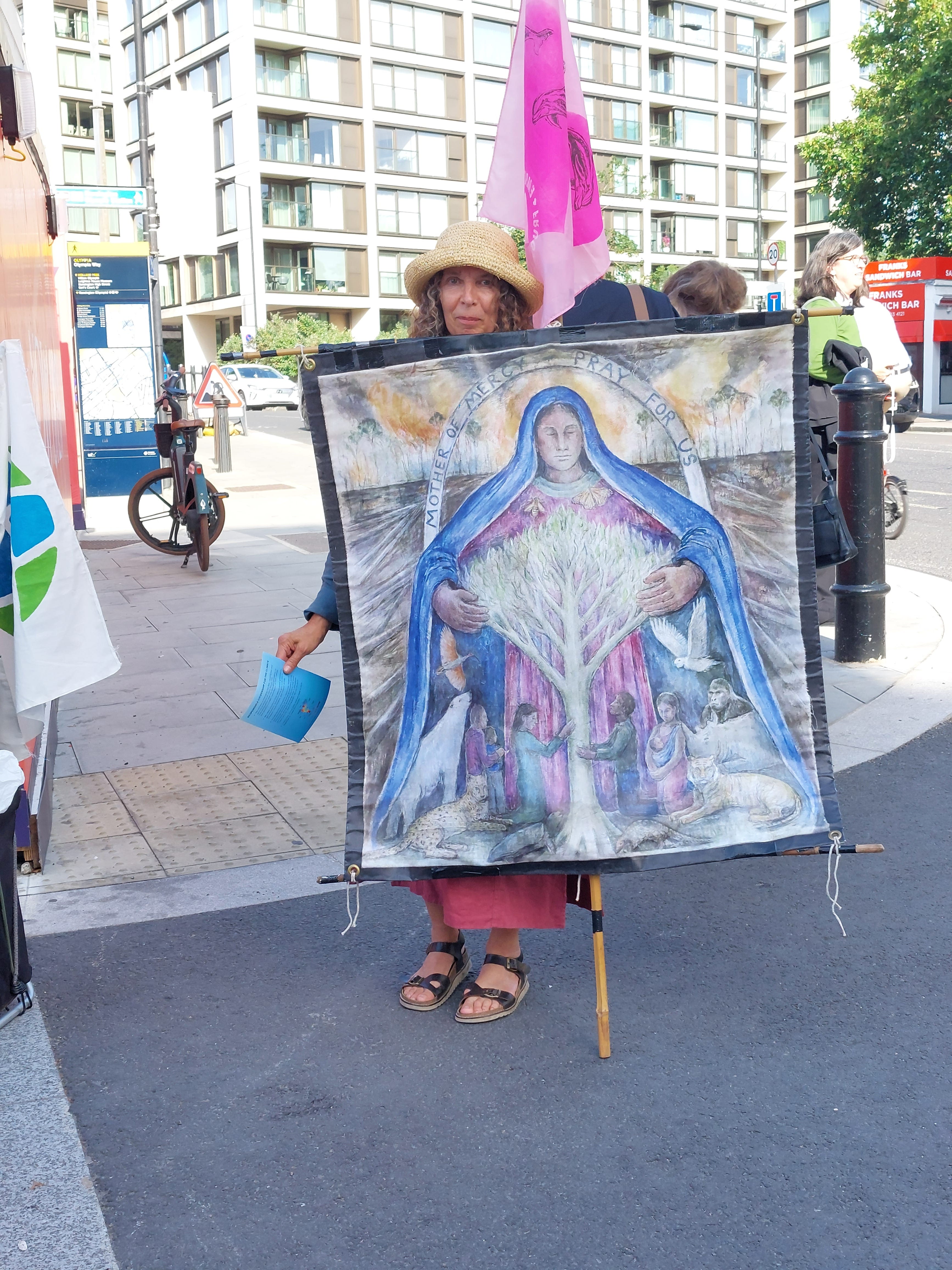
As I exited the building to catch a cab, I encountered a new set of climate protestors, equally muddled, but at least they were peaceful. This time I did snap a couple shots of their signs. I give them points for symbolic creativity!
My cabby and I had a difficult time finding each other, since my location “pin” was off, and he was indistinguishable in the rush-hour sea of black cabs. Already I was sweating in the city’s historic heatwave. But my hero persevered stubbornly, and we had a lovely ride. Native London cabbies are an essential part of The London Experience, a great informal way to take the pulse of the working-class populace. The friendlier ones will call you “love” and “darling” and don’t at all mind having a bit of a chat. (And of course, they know the city. On this ride we passed through a very posh neighborhood which I was told included Simon Cowell’s house.) As we talked away, I explained what I do and said I was going to a book launch about how the government controls people through information. The cabby said it felt to him as if there was a “higher power” at work even above the government. “Divide and control, know what I mean?” We also talked about COVID, and I shared how those years had affected me personally through my mother’s vaccine injury and subsequent chronic pain. He said his wife had found relief from chronic pain through acupuncture. For forty pounds an hour, he swore it worked “like a miracle.”
I arrived a little early at Verdurin, where Pierre had proudly advertised that they had air conditioning, and indeed it did not disappoint. He greeted me warmly at the door and subsequently took an avuncular interest in making sure I mingled properly before the event started. It was a cozy shop space, gradually filled by an eccentric little group of regulars and visitors. Not knowing anyone, I initially stood apart a bit awkwardly waiting to shake Jacob Siegel’s hand. Pierre’s eagle eye fell on me from across the room, and with a gentle scolding and a regal handwave he paired me off with a just-arrived cheerful lesbian couple.
Verdurin was initially born as, let us say, a COVID-era experiment in community-building. It advertises itself as “a place for challenging the ideas you hold dear, finding new ones, and taking them back to your bunker with you.” Inspired by Proust’s Madame Verdurin, Pierre conceived it as a third space that could simultaneously serve as shop, book club, classroom, and theater, where a diverse array of people are invited to come together and discuss a diverse array of ideas. Academics are sometimes welcome so long as they understand that they are not at an academic conference, at which point the hope is that they will actually begin to say something interesting.
Pierre didn’t mince words in his verdict on ARC. “I don’t believe any of them,” he told me. “None of them believes what they’re saying.” He thinks if they were really serious about the conference’s stated goals, they would do as Pierre does and invest in “creating culture.” On day one, he was briefly there to help man the Freedom in the Arts booth, but he ignored all the speeches. “I have no interest in being evangelized. I am more left-wing than all of them. And more right-wing.”
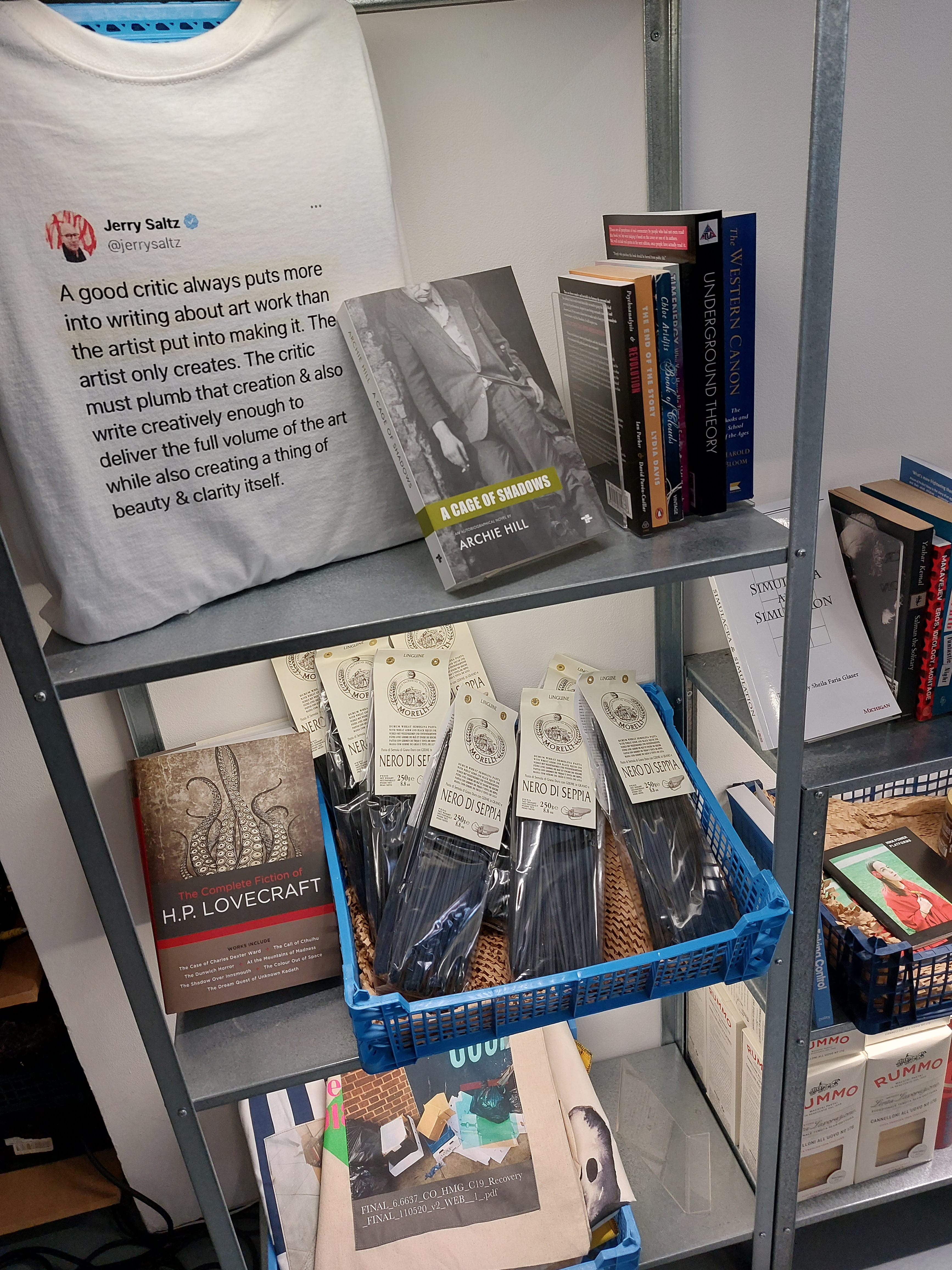
I did my small part to invest in Pierre’s culture creation by sampling some of the shop’s wares. Pictured below, a typical Verdurin shelf. The concept is to stock everything one would need in the event of an apocalypse. So there are books, but there is also quince jam, fermented tea, and artisanal black squid ink pasta. As Pierre explained, “The bomb goes off, you’re in your bunker, you’ll have to reach for your copy of The Iliad, and then you’re going to have to eat something.” (And yes, The Iliad is in stock.)
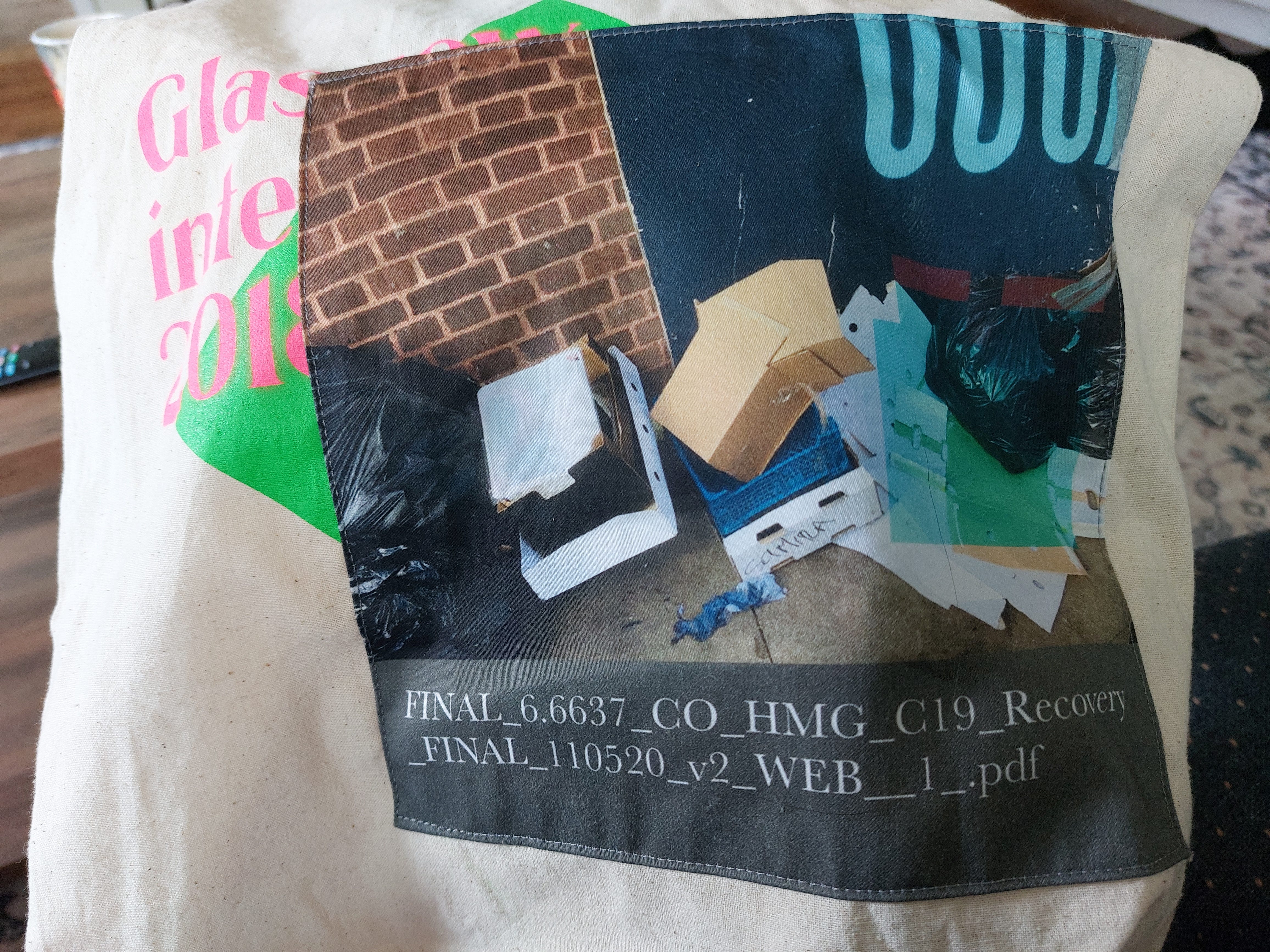
To carry my purchases, I bought the tote bag on the bottom. Pierre explained that the convoluted file name was the actual name of the file for the UK’s publicly released COVID recovery plan:
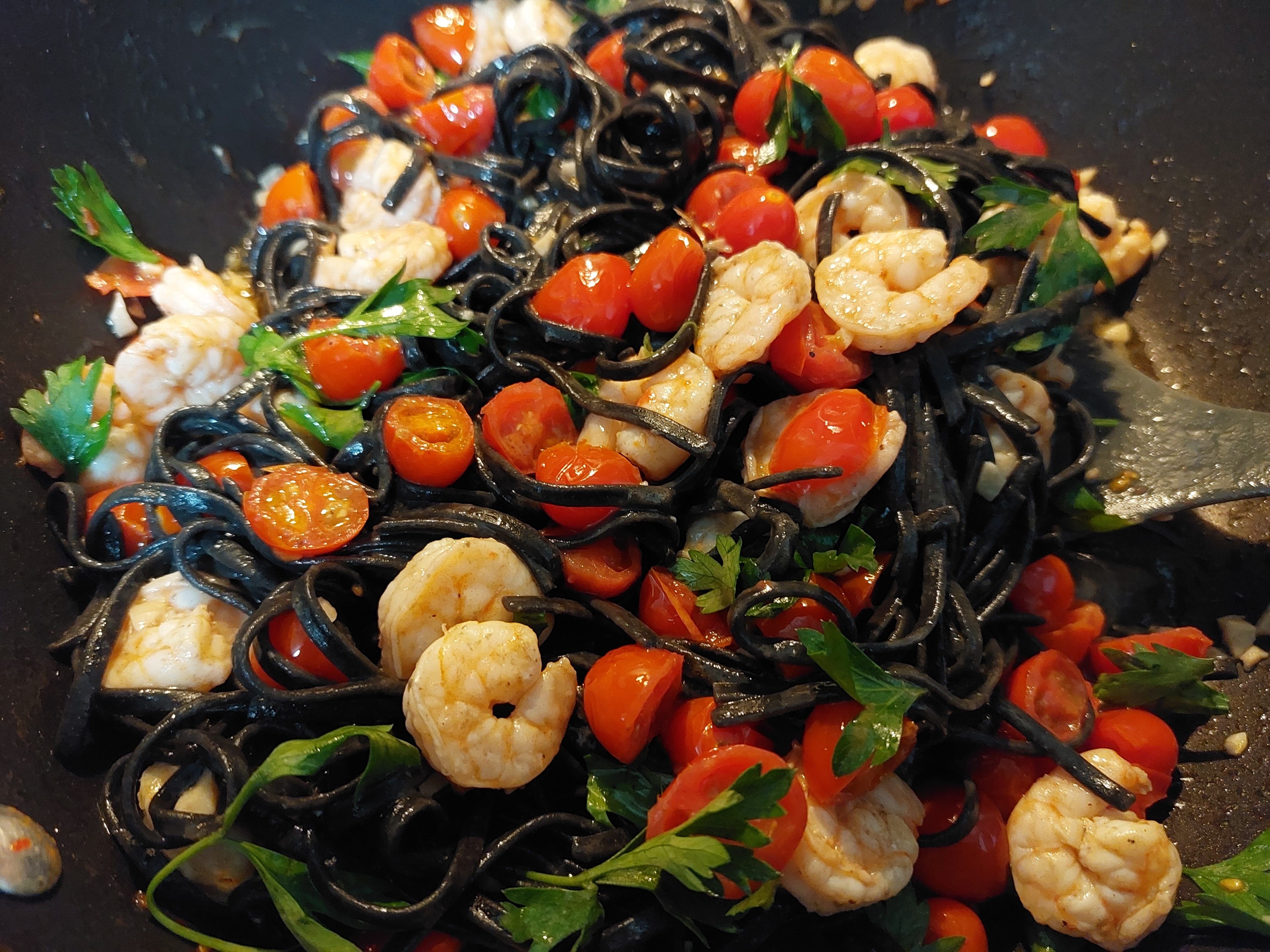
I also brought home a bag of squid ink pasta and made garlic brown butter shrimp with it. Recipe at the end as a reward for those who read that far.
As for the actual book launch, it was a stimulating treat (thanks not just to Jacob and Pierre but also the audience, including a woman who contributed her own insights as an expert on the history of communism). Jacob introduced himself with a backstory I could relate to, about growing up as the son of a maverick professor who disliked academia but inspired intensely intellectual dinner-table conversations. He was also the grandson of a World War II veteran, which instilled him with a natural and uncomplicated sense of patriotism. Though he wasn’t inclined to follow in his grandfather’s footsteps, the shock of 9/11 compelled him to enlist. His experience as an intelligence officer provided the inspiration for The Information State. In a former writing life, he was part of a veterans’ writing group, conceived as a kind of therapy, except that no one there wanted therapy, they just wanted to write. He worked on a volume of short stories with Phil Klay, who would go on to a celebrated career and whom I’ve long admired as a great fictional and non-fictional war writer.
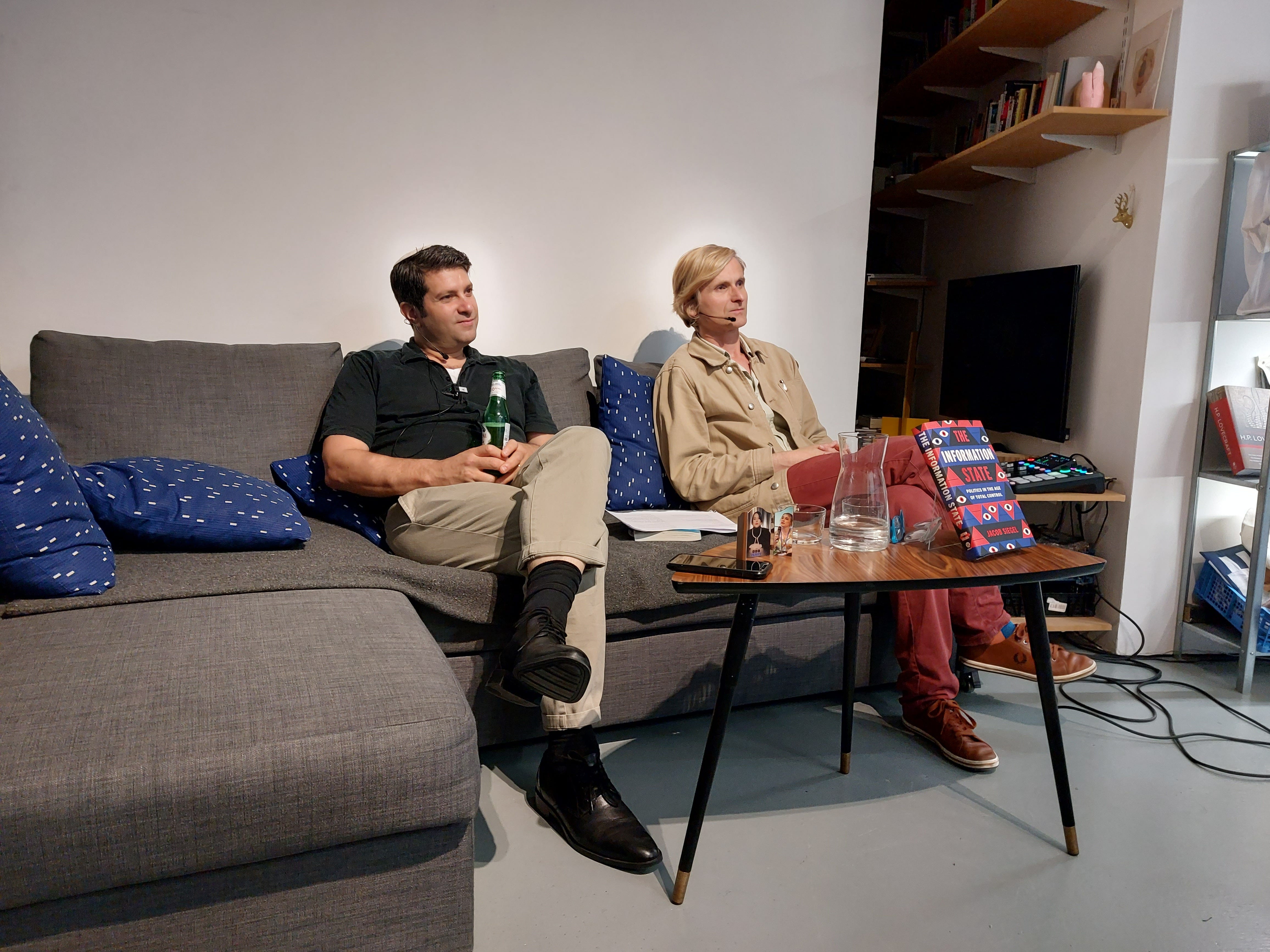
To set the stage for the book’s argument, Siegel offered fascinating candid impressions of our failed Middle East campaigns. As an intelligence officer, he had an “overawing” level of informational mastery, and he described how this tempted him to develop an almost “ritualistic” relationship with the data—believing somehow, somewhere, it must hold the secrets to winning the war, if only we could call on and extract it properly. But in fact, what he realized is that it was precisely this mentality that was losing the war. The tech couldn’t substitute for human decision-making, motivation, and will to fight. And yet, paradoxically, the more the tech fails to deliver on its promises, the more dependent we have all become on it, in every area of our lives.
Siegel traces the birth of the American information state back to Woodrow Wilson, arguing that the need to control information is “deep in the ethos of progressivism.” Wilson openly disliked the Constitution and believed “rule by experts” must be established over folk democracy. Within this ethos, “propaganda” isn’t a dirty word. In the COVID years, you could see how figures like Anthony Fauci and Francis Collins have inherited that legacy, as I wrote about in one of my more popular articles here.
But the thesis of the book really isn’t partisan, as both political sides in their distinctive ways have raced to harness technology for their controlling purposes. It was after all the Bush era that gave us the Patriot Act. And during COVID, hawks came in red and blue. In my contribution to the Q & A, I reflected on the fact that I encountered the most hostile pushback for my COVID contrarianism from Never Trump conservative types, who regarded me as something of a class traitor. Siegel’s chapter on those years brought back many bitter memories for me.
Siegel wrote the book too early to comment much on where Trump’s second administration fits into all of this, but at the launch he spontaneously coined the phrase “informational Caesarism” for the current chaotic state of things. Earlier I mentioned Trump’s feud with Anthropic, which seems to me quite self-defeating in its pettiness. Trump is so undisciplined, it seems that all he truly cares about is personal beef, meaning he’s willing to sacrifice the administration’s access to cutting-edge tech for the sake of settling a score. Meanwhile, all the infrastructure for reestablishing the information state is still there. Siegel predicts the Democrats will reascend in 2028, but he thinks their tactics will be subtler and more sophisticated than in the Biden era.
Beyond politics, Siegel also reflected soberly on how the digital age is functioning as a “cosmic reordering” of how humans interact with the world. It’s been observed that young people are increasingly not even literate. Siegel frames all this as a great reset, an unraveling of the Enlightenment and a return to a kind of new medievalism. “The power of reason” is an Enlightenment relic that will not survive the digital era. With this will come a new culture of morality, as well as new forms of idol worship. Here Siegel’s orthodox Judaism came out in an interesting way, as he discussed the rabbinical understanding of idolatry as not merely a rejection of God but a kind of longing for God.
The end of the evening put an unintentionally humorous period on these very serious reflections, as it transpired that all the kosher restaurants were closed. Jacob was unbothered by this, being an all-round mensch as well as a good writer, and after some more animated conversation we all went our separate ways.
And now, speaking of food, here as promised is the recipe I made with Pierre’s black squid ink pasta:
Garlic Brown Butter Shrimp Pasta
Ingredients:
1 package of shrimp deveined etc.
1 pint of cherry tomatoes
pasta
most of a butter stick
lots of garlic
lots of parsley
a little white wine
salt and pepper to taste
Instructions:
1. Chop up and blister the tomatoes in some butter. Salt and pepper. Remove and set aside.
2. Set pasta going. Meanwhile melt the almost-stick of butter and slowly brown it. Stir and monitor closely. Do not take a bathroom break, do not wander off to read The Iliad, do not look out the window. Give it 3-5-ish minutes on medium-ish heat, and not much more.
3. Add the garlic. When I say lots I really do mean lots. I chopped up four very fat cloves plus one thin one. It’s a free country. No one cares. Add a little more salt and pepper. After about a minute, pour in half a cup of white wine and let it boil for a couple minutes.
4. Pat the shrimp dryish, salt and pepper it, then cook in the garlic sauce, a few minutes per side. Add some pasta water as desired.
5. Toss in the pasta, add back the tomatoes, squeeze in some lemon juice and/or parmesan or pecorino cheese as desired. Garnish with fresh parsley.
And there you are! In the event of an AI apocalypse, at least you will know how to cook garlic brown butter shrimp pasta.
Re-subscribing just to get more ARC posts - wonderful! But most importantly, I think that Pierre and Bethel should co-host a podcast together...
Great read, thank you.I'm looking forward to reading more about the alluded to adventures!
I was curious if you think Trueman views expressive individualism as a problem or if his concern is (as I see it) more about performative individualism. The former can be expressing what is authentic about us. The latter is more about acting out that which is alien to who/what we are.