


My New Year’s sale continues. Upgrade to a paid annual subscription for just $30 to unlock exclusive content, along with my entire archive.
A warm 2026 welcome to all my readers. Here’s to a new year in which we all stick to our resolutions for once. As is tradition, today I’m taking stock of the previous year’s work and putting it in one place for your browsing pleasure. To those who stumbled into my corner of the Internet late in 2025, welcome, and I hope you stick around.
2025 wasn’t my fullest or most exciting year in writing, partly because I’ve been kept busy with “offline” work that took up time I would otherwise have invested into content here or elsewhere. The fruits of that work should become announceable some time this year or the next. However, I was still able to (hopefully) contribute helpful ideas to the discussion around some of the year’s key moments, while developing thoughts in the niches where my writing seems most distinctive and appreciated. As always, this is thanks in no small part to everyone supporting me here, for which I’m perpetually humbled and grateful. In a sea of Substacks, I’ve tried to keep mine reasonably affordable, recognizing that you could be spending your money literally anywhere else and that in terms of sheer content volume, I tend to prioritize quality over quantity. (Although I hope to raise both in the coming year.) I’m proud of the fact that I’ve been able to build a steady following here from the ground up, despite never having gone to journalisming school, landed any fellowships, written any books, or any of those other done things.
On that note, these were my most popular Substack pieces of 2025:
N. T. Wright and The Inner Ring: I find that I do some of my best work when I’m very ticked off, and this piece was no exception. When N. T. Wright’s ideas about abortion surfaced at the popular level last summer (though I realized they’d always been simmering if you knew where to look), it sent a wave of disappointment through academic Protestant world. This piece looked at the social factors underlying a certain kind of Protestant elitism, reflecting on why figures like Wright, Francis Collins and others are so consistently disappointing/compromised. I didn’t expect it to strike such a chord, but people just kept sharing it. One of those pieces I wish I didn’t need to write, but I’m glad to have written it.
Reasonable Faith Strikes Back: On a happier note, biblical scholar Wesley Huff’s appearance on the Joe Rogan show was an immensely encouraging publicity boost for American evangelicals, who are poorly represented or understood in pop culture. Huff was a winsome ambassador who made them look casually cool. In this piece, I focused on some of Huff’s particular strengths as an academic and apologist. On the surface, it might seem as if he’s retreading old ground from the Christian-atheist wars, but on closer inspection, he’s actually breathing new life into an engagement paradigm that’s grown sclerotic and beholden to poor apologetic models.
The Conference of Misfit Souls: I wrote about a little conference experiment in Chicago, designed to help the very online find their frens IRL. It worked as intended and helped me make a new best friend myself. As part of promoting the conference, which featured speakers like Rod Dreher, Jonathan Pageau and John Vervaeke, I did a podcast chatting with Dreher about his new book Living in Wonder. I couldn’t love this book as much as some other people, and I’m less excited about the whole “reenchantment” discourse in general, but I was engaged as ever by Dreher’s writing. Read my full review of the book here.
Je Suis Charlie: The murder of Charlie Kirk cast a long shadow over the year’s last quarter. I confessed to not having paid much attention to Kirk in life, while trying to grapple with the significance of his death.
Will the Last Conservatives Please Stand Up?: Any hopes that Kirk’s murder might spark some great right-wing unification have been dashed as various grifters make their plays. In hindsight, this was inevitable, albeit very depressing. “The right” as it currently exists can’t and won’t be unified, because there is nothing of substance to unify it. I didn’t write about the recent drama at AmericaFest, but it only bore out my analysis here, and I’m afraid it will only get worse. I’m more thankful than ever for principled conservative voices whose public image doesn’t shift based on the political weather (cough, Megyn Kelly).
Here are some of my personal favorite articles of the year. Pieces reserved for paid readers are marked with an asterisk:
AI Art is Stupid*: I’m fascinated and horrified by how rapidly AI is taking over various human endeavors. Whatever benefits it brings, I fear that among those who don’t know how to harness this tech well (which is most people), those benefits are being swamped. In this piece, I discuss the difference between Grok “art” and the real deal. Also for paid readers, I made a similar exploration of AI “music” here. Paid readers were additionally treated to my ranting about digital necromancy and a contemplation of whether AI is just demons (short answer: I don’t think so, but it’s still very bad).
Optimizing Ourselves to Death: Ross Douthat’s Interesting Times was the breakout podcast of the year. This piece was inspired by his interview with a woman who sells couples the ability to optimize their unborn babies, which in turn reminded me that I still needed to cross Gattaca off my to-watch list. The film moved me to reflect on how the designer baby phenomenon dehumanizes not only the imperfect, but the “perfect” as well.
The Case of the Four Gospels: Only One Jesus: Part of a series introducing people to some of my mom’s work on the reliability of the New Testament. This year, I decided to make all of it free. I also have the exciting news that an audiobook of Mom’s latest book is in the works, narrated by yours truly and hopefully available later this year. Our timing is good, with her work getting unexpected citations in both Douthat’s Believe and Charles Murray’s Taking Religion Seriously. (Read my double review of those books here in case you missed it.)
A Woman, Not a Symbol: There were a number of flashpoint moments this year where a regular person was flung into social media virality. Such cycles always make me deeply uncomfortable. This essay reflects on how people’s particular humanity gets flattened when they become political avatars.
Reenchanted Evangelism*: There’s a tendency for bookish religion writers like me to more or less ignore what’s happening in mainstream evangelical world. I think that’s a mistake. This piece dives into the work of a young California street preacher, assessing the intertwined promise and peril of intensely charismatic Christianity.
The Evil Genius of Tom Lehrer*: We lost some giants of the arts last year. I wrote about what made Tom Lehrer great and why his material still has fans in 2025.
A Grand Man*: I reviewed a bittersweet new documentary about John Candy. (All my film writing here at the Stack is gathered in one spot here, for those interested. I’d like to write more about film this year.)
Shepherds at War: I didn’t end up doing as much with this series as I’d intended to, but for the 80th anniversary of World War II’s end, I wanted to do some work highlighting the unsung contributions of our chaplains. I told several stories in this piece, another story for paid readers here, and a particular favorite story for First Things here. All focus on Christian chaplains, but I’m working on something that tells the story of how our Jewish chaplains become advocates for Holocaust survivors.
Outside the Stack, I’ve continued to write regularly for First Things and World, two magazines that have been very good to me. I was back in print at World for a feature on books that have shaped me, loosely organized around a theme. I chose the theme of tragedy and said a few words about Chaim Potok’s The Chosen, Thomas Sowell’s Vision of the Anointed, and Walter Miller’s Canticle for Leibowitz. A fun perk of this commission was that I got a fresh set of headshots thanks to Genesis photography. It worked out that I was able to rendezvous with my photographer at the Chicago conference, and we got some nice shots around the church hosting the event. Here I am looking pensive:
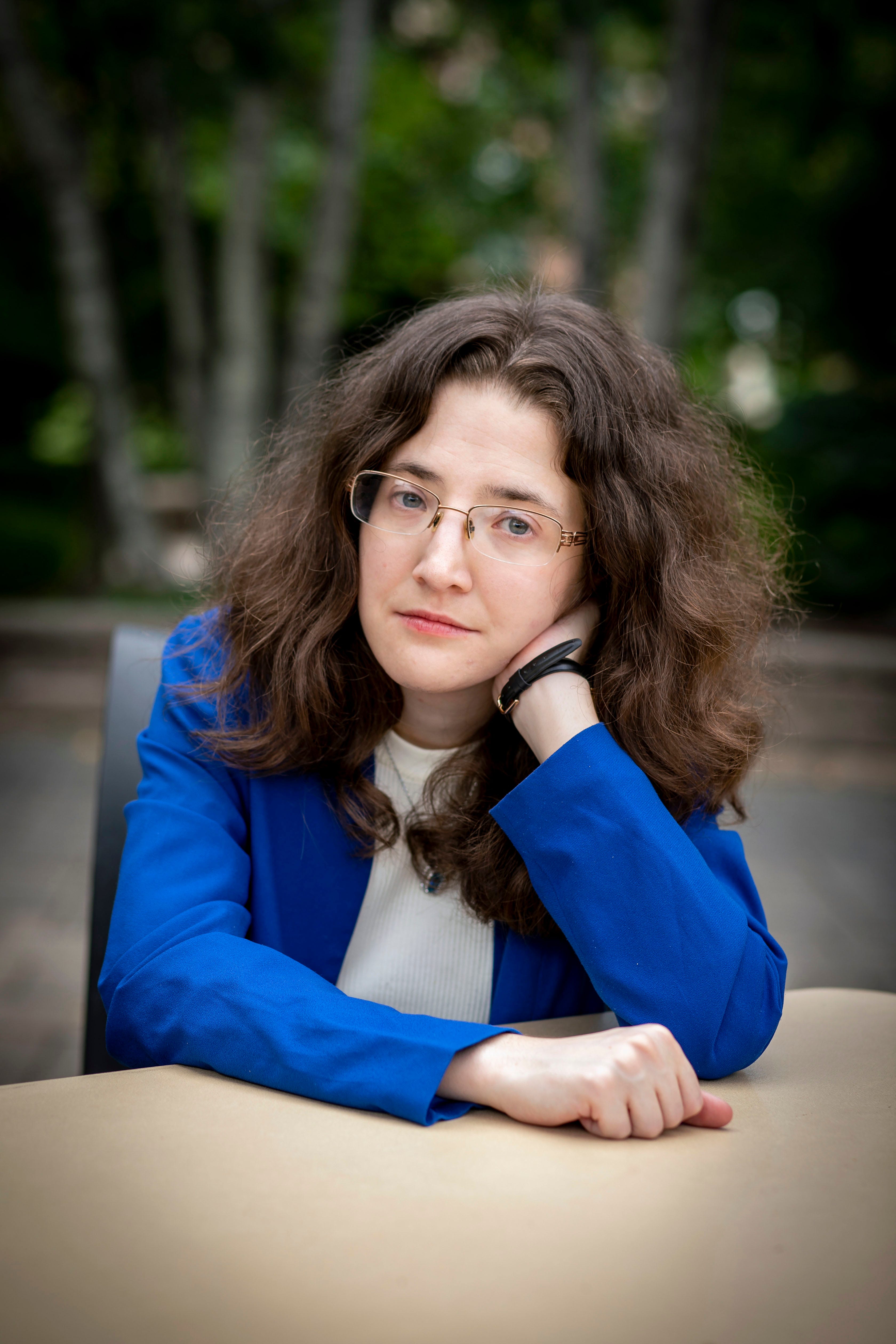
Here’s me judging you:

Here’s me being less judgy and more smiley:
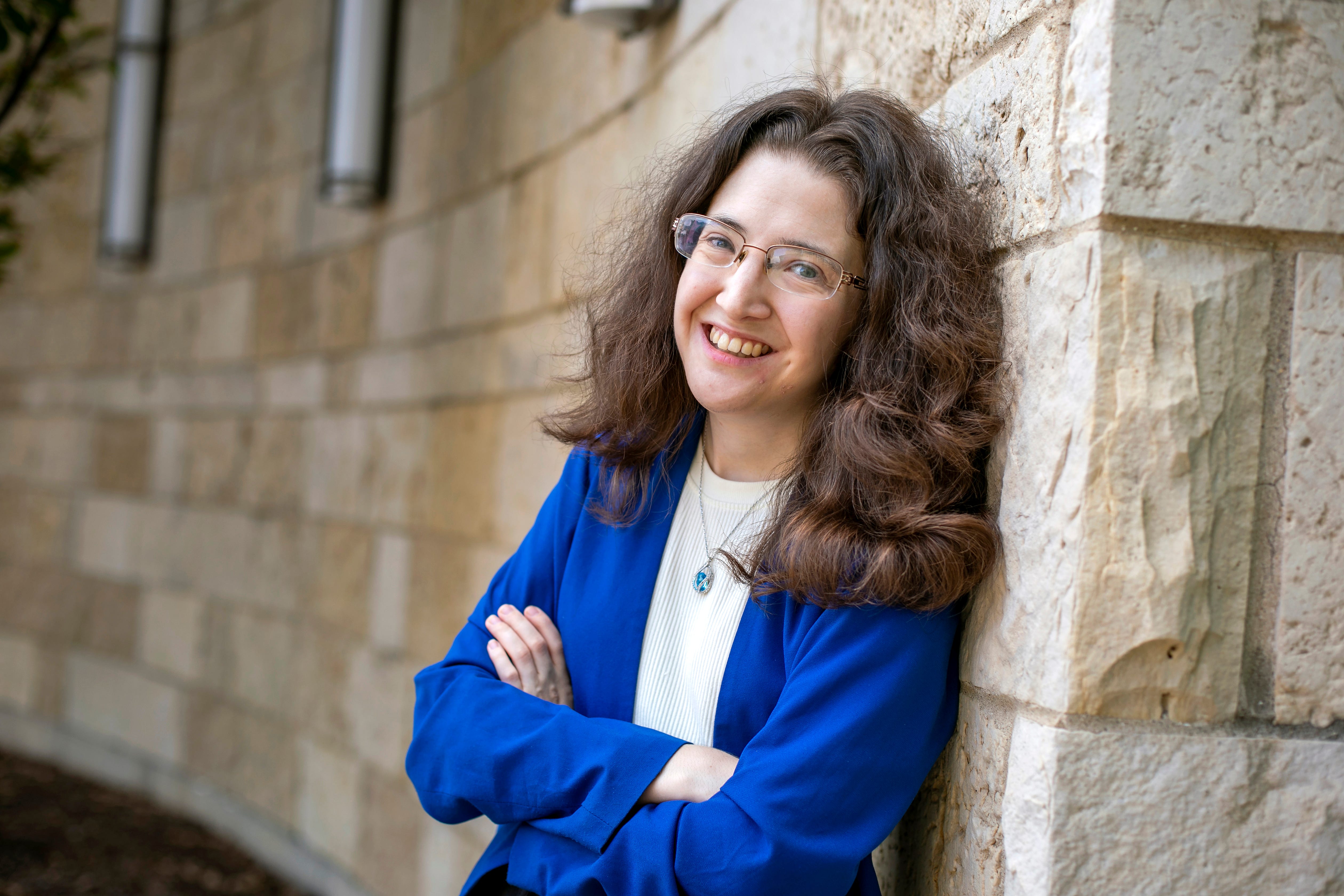
Alright, back to the writing. At World Opinions, among many other short columns I wrote a reflection on the 20th anniversary of Terri Schiavo’s murder. It’s hard to believe it’s been 20 years since Schiavo’s death, an event that played a huge formative role in my political consciousness. I had the honor of meeting her family at a small event in Lansing, Michigan.
I also looked back at the infamous gay activist handbook After the Ball, which happened to have a round anniversary coinciding with the 10th anniversary of gay marriage. Two new books came out at the end of this year taking stock of where the gay rights movement is now and whether “mistakes were made,” as they say. I didn’t have time to digest them properly before the year was out, but I’ll probably write more this month.
Turning to my year at First Things, I made my debut in their print magazine with a double review of Kelsey Osgood’s Godstruck and Lamorna Ash’s Don’t Forget We’re Here Forever, two journalistic explorations of religious conversion. This was an inspired pairing, and I really enjoyed reflecting on what both books have to say about the spiritual zeitgeist, particularly among young people. As for my online pieces, topics ranged from British MP Danny Kruger’s pro-life Christian witness to Glenn Greenwald’s fake gay victimhood to commonalities between Nick Fuentes and Richard Hanania. (My proposal is that Fuentes is relegated to the fringe because he’s a politically incorrect Nazi, while Hanania is courted by mainstream media because he’s a respectable Nazi.) I also did a brief assessment of the phenomenon of public intellectual friendliness to Christianity, and what’s needed for someone in that sphere to make the full leap to a robust Christian faith. It’s not been tried and found wanting, only found difficult and (mostly) untried. The conversion of Wikipedia founder Larry Sanger was one of the year’s most encouraging stories, a rare example of someone who actually “did the reading” and followed the argument where it led him. You can read a longer piece I did on Sanger for paid Stack readers here.
I kept my hand in over at British magazine The Critic with a piece marking the 80th anniversary of Eric Liddell’s death. This drew heavily from Duncan Hamilton’s beautifully written For the Glory, maybe my favorite book I read this year.
Finally, I continued to dip a toe in poetry, with several publications I’m proud of:
Psalm of the Flood: My first poem in New Verse Review, a growing new formalist outlet.
Stargazing: Also published at New Verse Review for a collection in memory of David Lynch. This was inspired by his film The Straight Story—my first piece in terza rima. You can read my full reflections on the film for paid Stack readers here.
Lines On the Death of a Friend: In honor of a dear family friend who was snatched away much too soon. Published by my friend Alex Rettie at Poems for Persons of Interest.
Dream Of the Old City: Also published by Alex Rettie as part of an Easter bouquet.
Trinity: On the atomic bomb, inspired by Richard Feynman’s memoirs—my first foray into blank verse. Alex picked this up as well, but you can read it with my poet’s notes at the link.
That was it for written work outside of Substack. For some reason, I’ve found it increasingly more difficult to place essays outside a couple of reliable outlets than I did in the past, but a goal for 2026 is to try to add at least one new byline. Meanwhile, I also had some unexpected podcast opportunities, most excitingly the chance to sit down with former Australian deputy prime minister John Anderson in London (my first ever visit, hopefully not the last!) This was a happy byproduct of having some time to kill when I flew over for the ARC conference. (I wrote all about my adventures in a few postcards here, here and here.) I’m far more comfortable behind a laptop than in front of a camera, but John’s team was so kind and made the experience lovely and smooth for me. Watch our full conversation, expertly stitched together so that no one could tell how many takes we flubbed in our severely jetlagged state:
Also at ARC, Justin Brierley offered me the opportunity to chat with James Lindsay and Carl Benjamin, two Internet personalities with a large contingent of haters, but our short conversations were equable. It was especially interesting to hear Benjamin sketch his version of the “religious but not spiritual” approach increasingly carved out by older millennials. I offered further reflections on our chat and on this phenomenon for paid readers here.
Finally, Brierley invited me to have a discussion with Dr. Nijay Gupta about Charlie Kirk’s murder here. This conversation took a few unexpected turns, to say the least. I did my best to offer a nuanced take on Kirk’s legacy while highlighting some of the more hopeful signs I saw amid the chaotic fallout from his murder, including many people who were earnestly inspired by his example to take Christianity seriously. That story was lost in all the sordid political back-and-forthing, and some dismissed it as a passing fad, but I suspect there was more to it. It’s a story I’d like to look into and tell at more length this year, if I can find enough people willing to talk to me.
With that, thanks to all of you who’ve invested in my work. I hope I can continue to give you your money’s worth in the months ahead. Onward!
Thanks for sharing this, Bethel! A few ideas from history to pitch for 2026:
The obvious - America’s 250th. Perhaps take a deep dive into history, and share your thoughts on how the founding fathers would view the republic today, if they left any hints?
Less obvious:
Presidents John Adams and Thomas Jefferson’s friendship (?) and the significance of both dying July 4, 1826
In 1976 Bruce Jenner won his first and only gold medal during the US bicentennial year. Maybe reflect on that - and how Bruce and the rest of us arrived to today - at some point?
25th anniversary of September 11. I think you and I are of similar age. How did this event fundamentally shape our lives?
Bethel - those pictures turned out great! So glad I got to spend time with you at the conference and I hope to continue to enjoy your work in 2026!